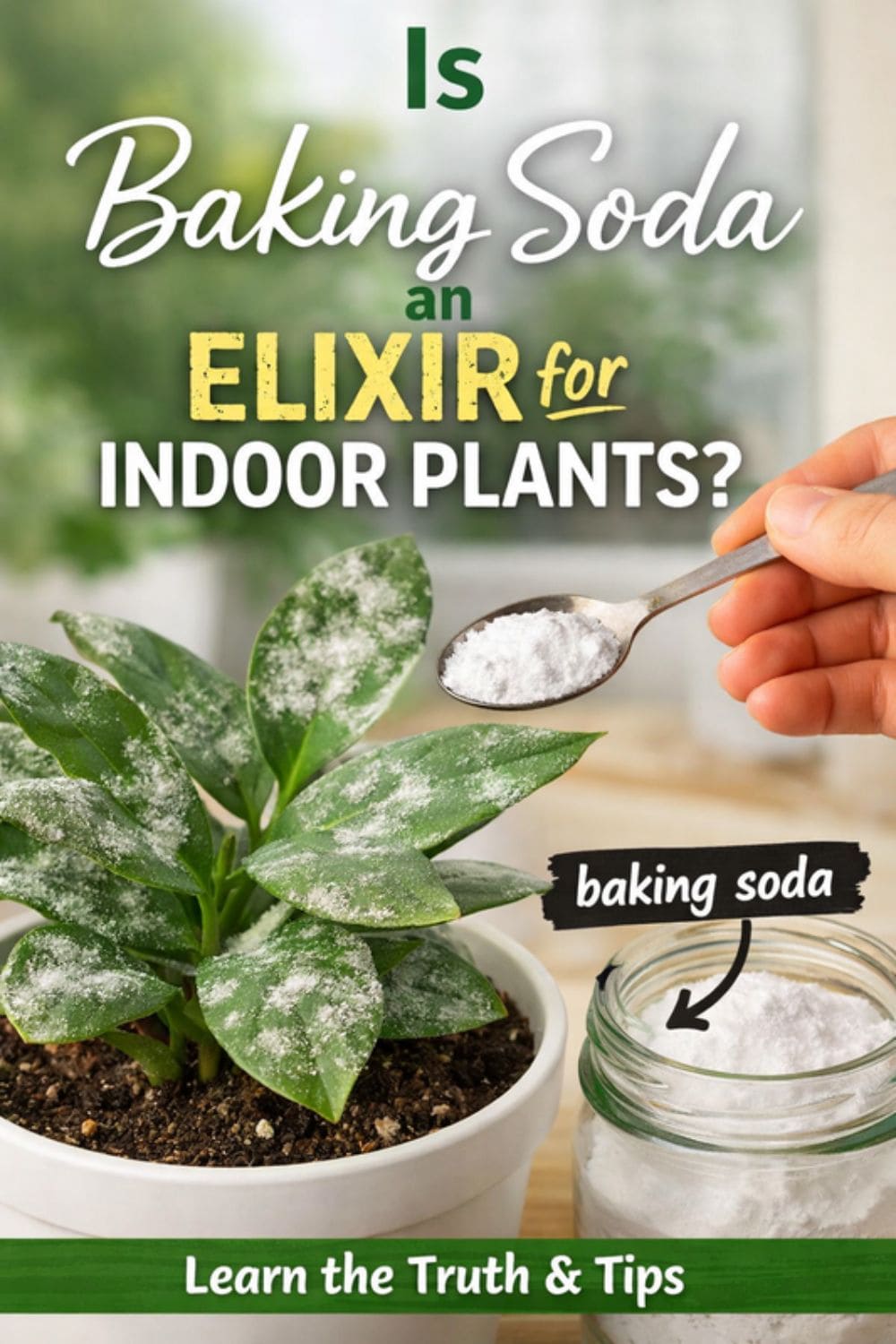
I’ve noticed that baking soda keeps getting framed as a kind of miracle cure for indoor plants.
It shows up in comment sections, reels, and casual advice, usually presented as a harmless kitchen staple that magically solves mildew, pests, and soil problems.
Baking soda can be useful for indoor plants, but only in narrow, well-defined situations.
It doesn’t improve growth. What it does is alter surface chemistry in ways that can help with specific problems, while quietly creating new ones if it’s used carelessly.
What Baking Soda Actually Does to Indoor Plants
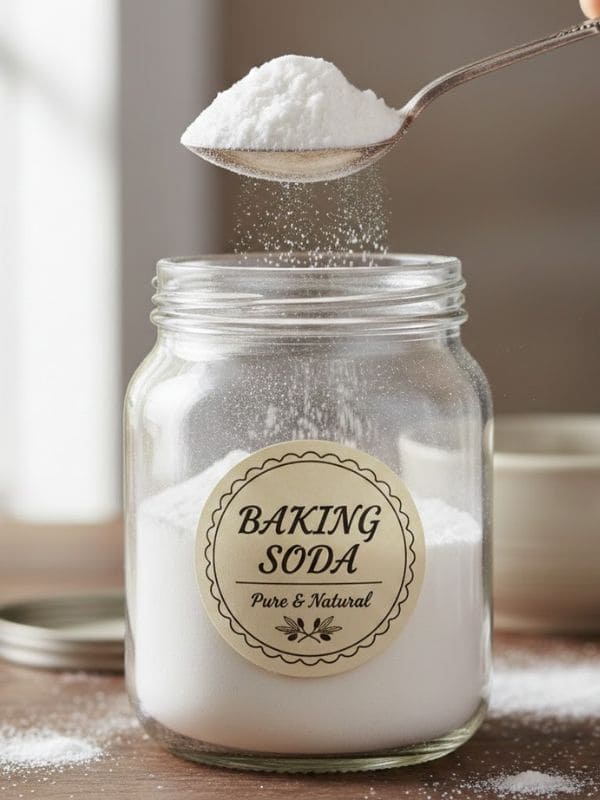
Baking soda is sodium bicarbonate. When dissolved in water and applied to leaves or soil, it raises pH and introduces sodium ions. That single fact explains both its usefulness and its risks.
Fungal spores, especially powdery mildew, prefer slightly acidic surfaces. Baking soda disrupts that environment, making it harder for spores to germinate and spread.
This effect happens on the surface of leaves, not inside the plant, which is why baking soda works best as a preventive or early-stage treatment, not a cure for advanced disease.
At the same time, sodium accumulates in potting soil far more quickly indoors than outdoors.
Rain doesn’t flush containers. Excess salts remain trapped around roots, interfering with water uptake and nutrient absorption.
This is why baking soda should never be applied routinely or directly to soil as a booster.
Indoor Plant Problems Baking Soda Can Actually Help With
Powdery Mildew on Houseplant Leaves
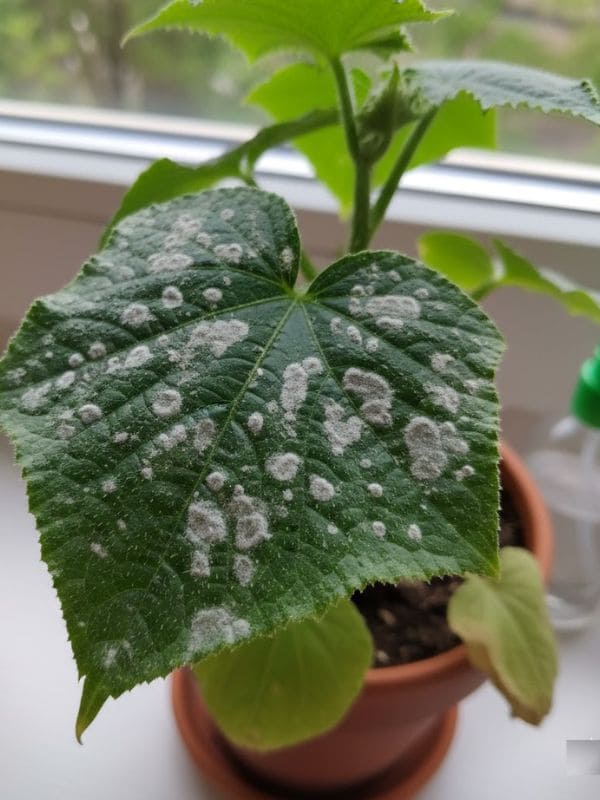
This is the most legitimate use of baking soda in indoor plant care.
Powdery mildew often appears as a fine white coating on leaves, especially in humid rooms with poor airflow. A properly diluted baking soda spray alters the leaf surface pH enough to slow fungal spread.
It works best when applied early, before mildew thickens or distorts new growth.
Once leaves are heavily coated, baking soda alone won’t reverse the damage.
At that stage, pruning affected leaves and improving airflow matters more than any spray.
Light Fungal Growth on Soil Surface
Indoor pots that stay moist for long periods often develop a pale fungal film or mold on the soil surface.
This growth isn’t always dangerous, but it signals excess moisture and low oxygen levels.
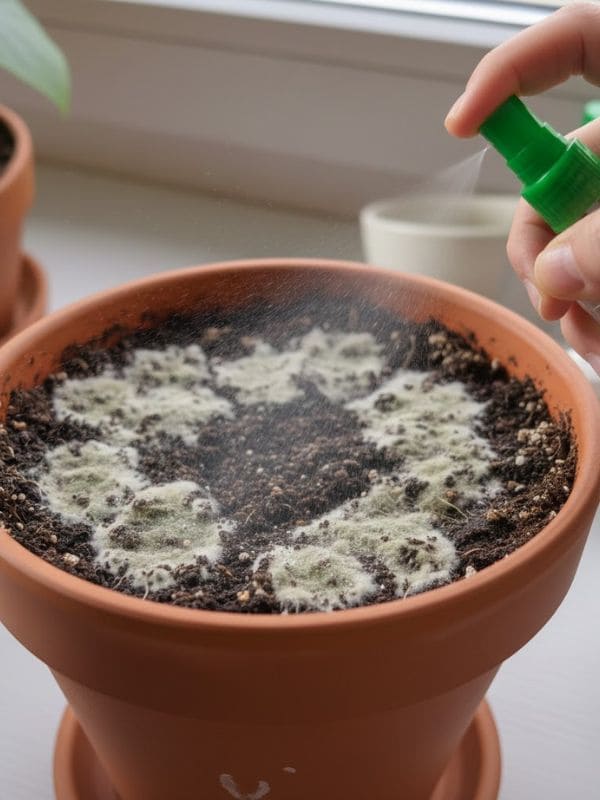
A mild baking soda solution can temporarily suppress surface fungi by changing pH at the top layer of soil.
This should be viewed as a short-term intervention while you correct watering habits, improve drainage, or increase light. Baking soda cannot compensate for chronically wet soil.
Sour or Musty Soil Odors
When soil smells sour rather than earthy, anaerobic microbes are often active.
Baking soda can neutralize odor-causing compounds and stabilize surface conditions long enough for better airflow and drying to restore balance.
This works only when roots are still healthy. If root rot has already begun, baking soda masks symptoms without addressing the underlying problem.
Very Mild Pest Deterrence
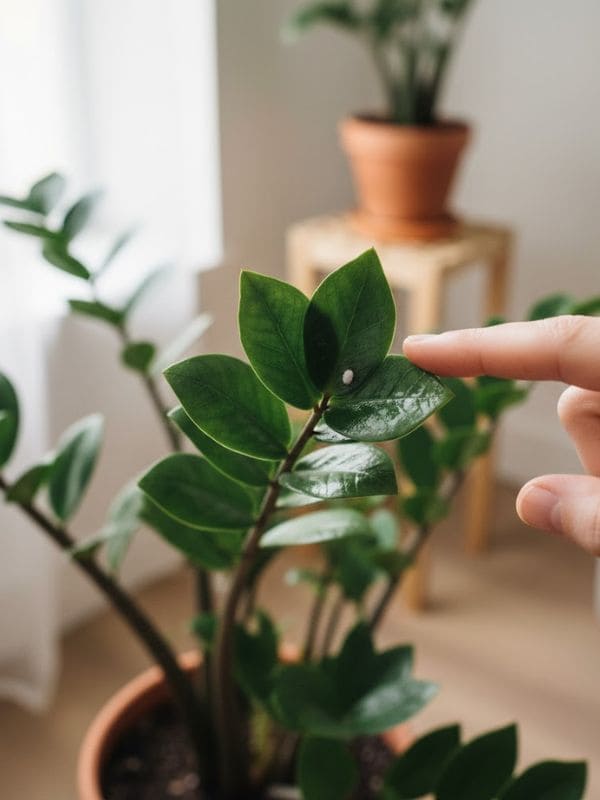
Some growers use diluted baking soda sprays with a trace of mild soap to discourage soft-bodied pests such as aphids during early infestations.
Baking soda does not kill established pest populations, but it may help slow them when combined with proper sanitation and isolation.
How to Use Baking Soda on Indoor Plants
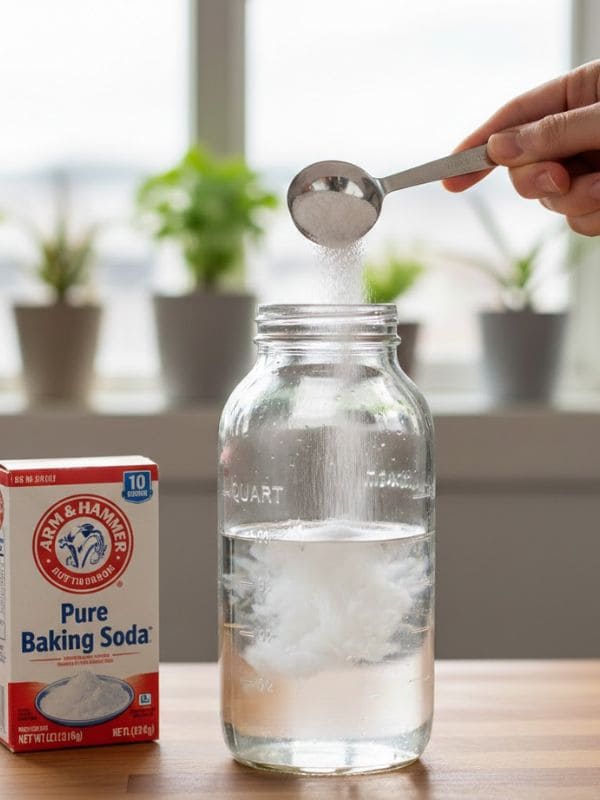
For leaf applications, the safest ratio is half a teaspoon of baking soda per quart of water. This concentration is strong enough to alter surface pH without burning leaf tissue.
A single drop of mild liquid soap can help the solution spread evenly across leaves, but more than that increases risk.
Spray only affected leaves, lightly, and preferably in the morning so foliage dries quickly.
Reapplication should never be more frequent than once every ten to fourteen days. One or two applications are usually enough to see whether it helps.
Also, baking soda should not be poured into soil, sprinkled dry, or used repeatedly as a soil treatment.
Doing so accelerates sodium buildup and leads to long-term root stress.
Which Indoor Plants Tend to Tolerate Baking Soda Better
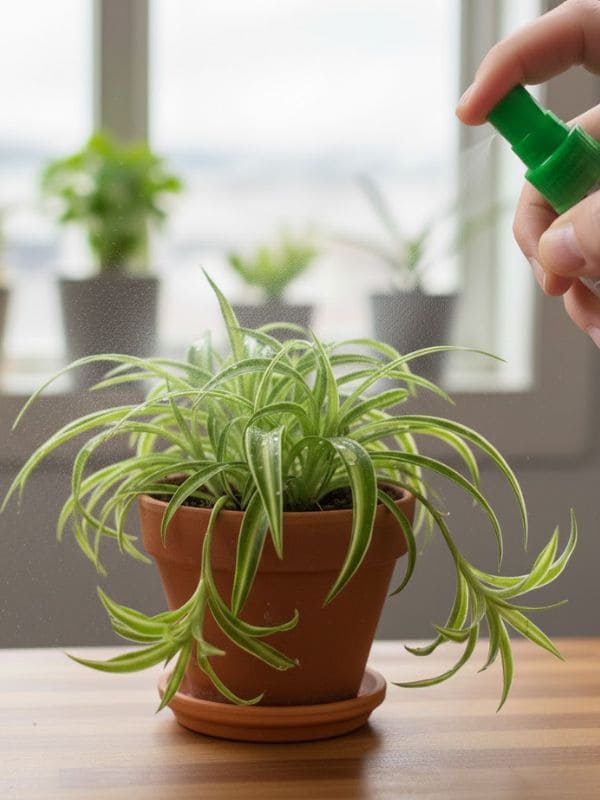
Plants with thick, waxy, or leathery leaves tend to tolerate occasional baking soda sprays better because their leaf surfaces are less permeable.
Snake plants, ZZ plants, pothos, spider plants, and rubber plants fall into this category.
These plants evolved to handle environmental stress and minor chemical fluctuations, especially when applications are infrequent and diluted.
Indoor Plants That React Poorly to Baking Soda
Plants that prefer acidic conditions are the most vulnerable.
Peace lilies, ferns, orchids, African violets, calatheas, and begonias rely on stable, slightly acidic environments. Even small pH shifts can disrupt nutrient uptake and damage sensitive roots.
Plants with thin, fuzzy, or delicate leaves also react poorly to baking soda sprays because residue lingers on the leaf surface and interferes with gas exchange.
Additionally, seedlings and newly repotted plants are especially at risk because their root systems are still adapting.
Warning Signs That Baking Soda Is Harming Your Plant
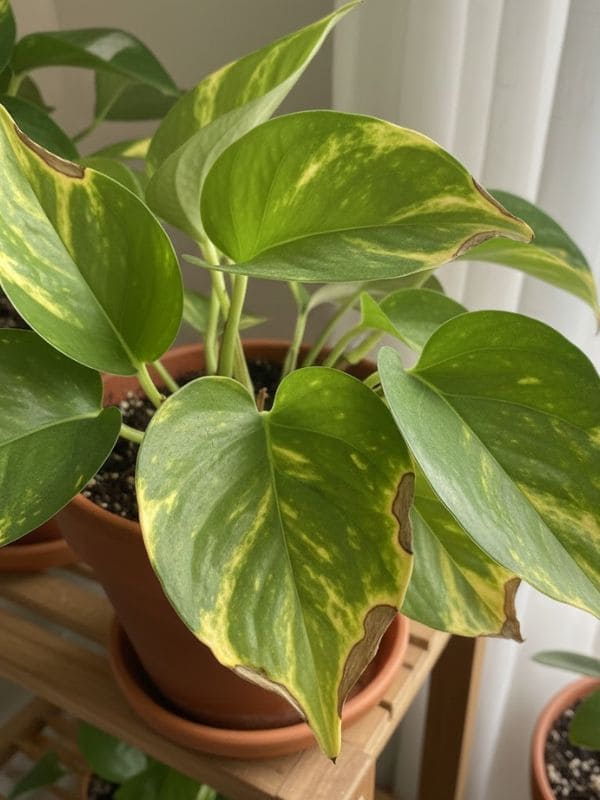
Damage rarely appears immediately. Instead, it builds quietly.
Leaf edges may turn yellow or brown, especially on older leaves. Growth slows despite adequate light and watering.
Plus, a white crust can form on the soil surface, signaling salt accumulation. Leaves may lose flexibility or develop a dull, lifeless texture.
If these signs appear, the best response is flushing the soil thoroughly with plain water to leach excess salts, then discontinuing all baking soda use.
The Most Common Baking Soda Mistakes
The biggest mistake is treating baking soda as a routine care product rather than a targeted intervention.
Many people also apply it too often, assume natural means harmless, or combine it with other home remedies without understanding chemical interactions.
Another frequent issue is ignoring airflow, drainage, and watering habits while relying on baking soda to fix symptoms.
When environmental conditions remain unchanged, problems return and soil quality continues to decline.
Is Baking Soda Really an Elixir for Indoor Plants?
Calling baking soda an elixir oversells what it can do. What it does offer is situational support for specific problems, mainly fungal pressure and odor control.
Used with intention, it can be helpful. Used casually or repeatedly, it becomes a slow source of stress that indoor plants cannot escape.
See more: Here’s Why Baking Soda Is a Gardener’s Best Companion