If you’ve ever struggled with getting your Kalanchoe to bloom, you’re not alone.
These beautiful succulent plants are known for their vibrant, colorful flowers, but sometimes, they seem to have a mind of their own.
Whether it’s the bright yellow, red, or orange blooms you’re after, getting your Kalanchoe to flower requires the right care and attention.
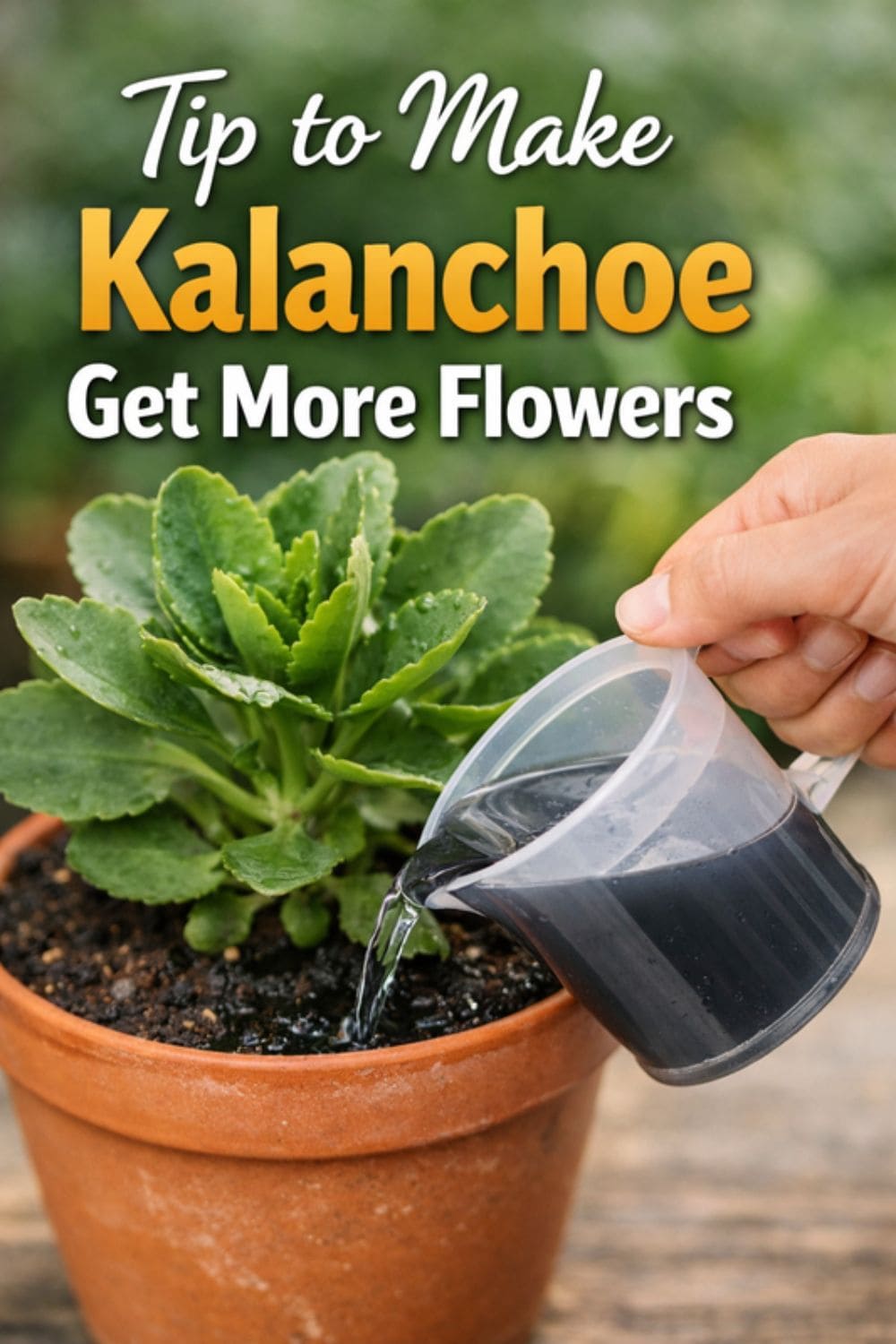
One of the best tips to encourage your Kalanchoe to bloom is surprisingly simple: using charcoal! Here’s everything you need to know about this unconventional yet highly effective method.
About Kalanchoe: A Vibrant Succulent
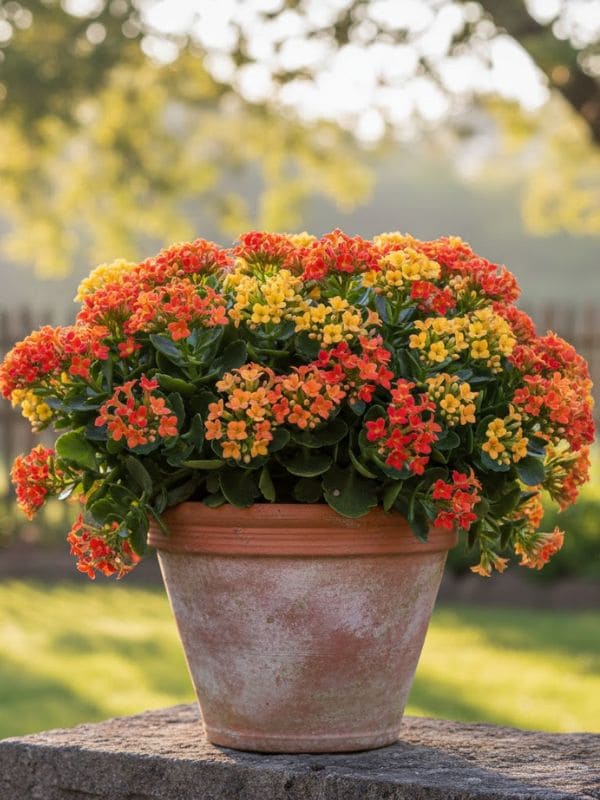
Kalanchoe, a genus of succulent plants, is well-known for its stunning blooms and resilience. Native to Madagascar and tropical Africa, it thrives in warm, dry climates.
These plants have fleshy, water-storing leaves, which makes them ideal for drought-prone environments.
The best-known varieties for home gardening are the Kalanchoe blossfeldiana, commonly called the flaming Katy, which produces colorful flowers in a variety of shades.
While Kalanchoe is a fairly easy plant to grow, getting it to flower can sometimes feel like a mystery.
The key to a flourishing Kalanchoe is giving it the right conditions and using the proper tools like charcoal to stimulate the blooming process.
But before we get into that, let’s talk about the benefits of using charcoal in your gardening routine.
Why Charcoal for Kalanchoe?

Charcoal, a common byproduct of the barbecue grill, has long been known for its benefits in gardening.
If you’re a fan of grilling, you might already have some leftover charcoal at home that you can reuse! Charcoal provides numerous advantages to your plants, especially your Kalanchoe:
1. Antiseptic Properties:
Charcoal acts as a natural antiseptic, helping to prevent fungal and bacterial diseases in the soil. This is particularly useful for Kalanchoe, as these plants are susceptible to certain root diseases.
2. Rich in Potassium and Phosphorus:
Charcoal contains both potassium and phosphorus, two vital nutrients that are essential for flower production.
Potassium supports flower development, while phosphorus plays a role in root growth and blooming. These elements can help boost your Kalanchoe’s ability to bloom.
3. Soil Aeration:
Charcoal helps in improving soil aeration by breaking up compacted soil, ensuring that your Kalanchoe’s roots have access to enough oxygen and can grow more vigorously.
How to Use Charcoal to Make Your Kalanchoe Bloom
Now, let’s dive into the step-by-step process of using charcoal to encourage your Kalanchoe to bloom.
This simple yet effective method can help your plant thrive, and it’s surprisingly easy to do!
Step 1: Gather Your Charcoal
First things first, you’ll need charcoal. You can buy activated charcoal at garden centers or online, but you can also repurpose the leftover charcoal from your barbecue.
However, make sure that the charcoal is free of any chemicals or lighter fluid, as these can harm your plants.
Step 2: Choose the Right Charcoal
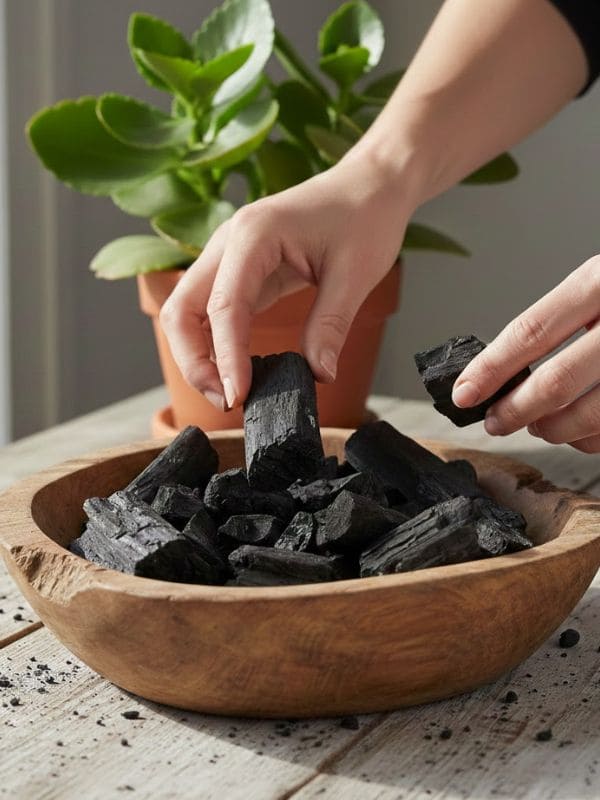
If you’re buying charcoal specifically for this purpose, you’ll want to look for natural, untreated charcoal.
Charcoal that is free of additives is best, as these chemicals can be harmful to your plant. Standard lump charcoal or charcoal briquettes (without added chemicals or fillers) work fine.
Avoid charcoal that’s been treated with any kind of chemical agent, as this could damage your Kalanchoe.
Step 3: Crush the Charcoal
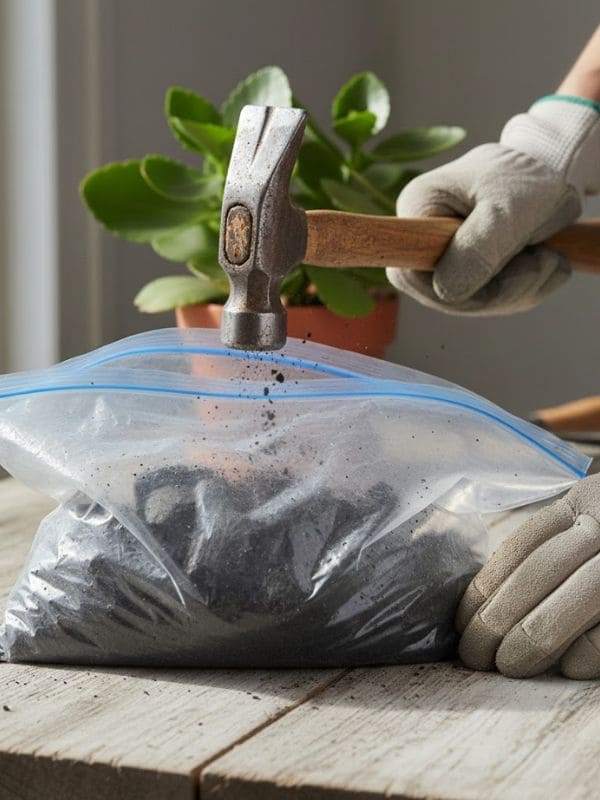
Once you have your charcoal, crush it into small pieces. You’ll need about one tablespoon of crushed charcoal for every liter of warm water.
You can easily crush charcoal by placing it in a sturdy bag or between two heavy items and gently tapping it with a hammer or mallet.
Step 4: Prepare Charcoal Solution
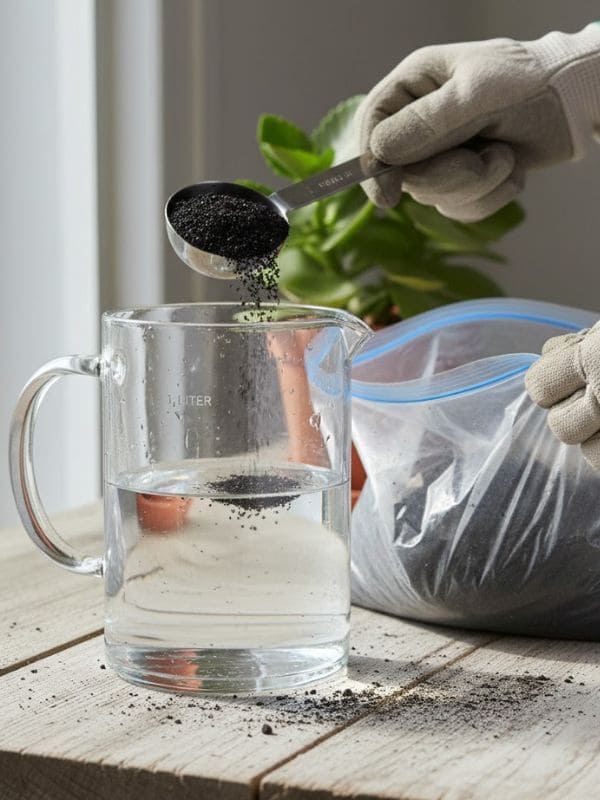
You now take one tablespoon of crushed charcoal and add it to one liter (about 4 cups) of warm water.
The water should be around 120-130°F (50-54°C), just warm enough to dissolve the charcoal without being too hot.
Then stir the mixture thoroughly to ensure the charcoal is well-mixed with the water. This will create a nutrient-rich liquid that you can use to feed your Kalanchoe.
Step 5: Let the Solution Rest
Once you’ve mixed the solution, allow it to rest for about 1 hour. This gives the charcoal enough time to infuse the water with its beneficial nutrients.
If you want to strain the mixture, you can do so, but it’s not strictly necessary as the charcoal particles won’t harm the plant, and the roots may benefit from the added minerals.
Step 6: Water Your Kalanchoe
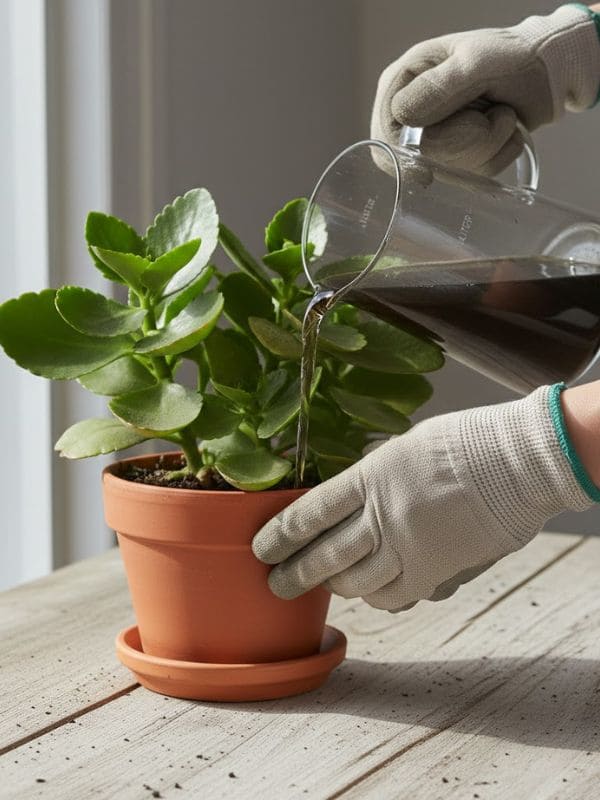
After the charcoal solution has rested, you can begin watering your Kalanchoe with it.
Gently pour the mixture around the base of the plant, ensuring that the soil is well-moistened. You can repeat this once every two weeks to help encourage healthy blooming.
How Often to Water Your Kalanchoe
Kalanchoe is a succulent, so it’s important not to overwater it. These plants are adapted to dry conditions and can easily succumb to rot if they get too much moisture.
In summer, water your Kalanchoe once a week. Make sure the soil is completely dry before watering again. In warmer weather, succulents tend to need more frequent watering.
In winter, you just water once a month. Kalanchoe goes into a dormant phase during the colder months, and it doesn’t need as much water.
Additionally, be sure to keep the plant in a bright location and avoid watering too often.
Additional Tips for Kalanchoe Care
Kalanchoe requires bright but indirect light. A sunny windowsill with filtered light is perfect.
Too much direct sunlight can scorch the leaves, while too little light can prevent the plant from blooming.
You also should keep your Kalanchoe in a temperature range of 60-85°F (15-29°C).
It’s important to protect the plant from extreme heat or cold, as it may affect its growth and ability to bloom.
Finally, fertilize your Kalanchoe every 6-8 weeks during the growing season (spring and summer).
You need to use a balanced, water-soluble fertilizer diluted to half strength. However, be cautious with fertilizing during the winter months, as the plant is less active.