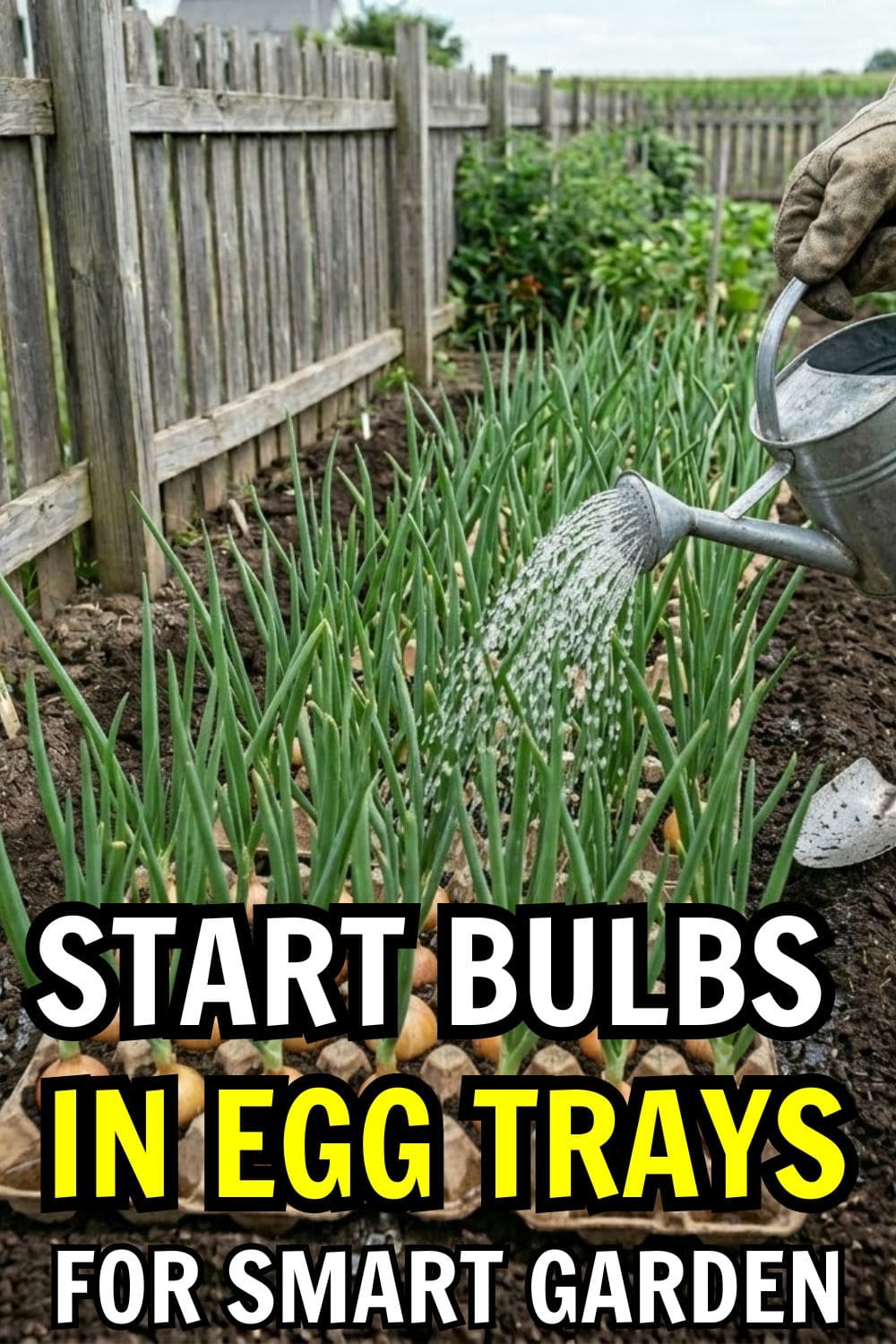
Using egg trays to start bulbs is one of those simple gardening ideas that actually works better than you expect.
The divided cells keep each bulb separated, encourage tidy root growth, and make transplanting much easier.
If you use cardboard trays, they even help regulate moisture because the material absorbs excess water instead of trapping it around the bulb.
This guide focuses on using 30-egg cardboard trays specifically. They provide more planting space, better stability, and easier management compared to 6 or 12-egg cartons.
With the right soil, moisture control, and timing, you can pre-sprout onions, garlic, tulips, lilies, shallots, and small ornamental bulbs efficiently and inexpensively.
Why 30-Egg Trays Are More Effective Than Smaller Cartons
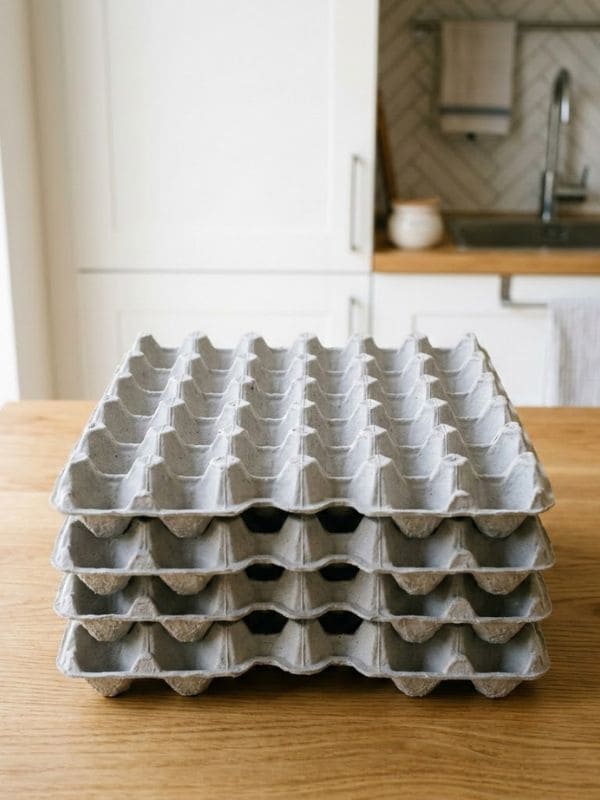
A 30-egg tray offers stability and consistency. Smaller cartons dry out quickly around the edges and tip easily once filled with soil.
The wider base of a 30-cell tray distributes moisture more evenly and makes watering easier to manage.
Cardboard trays are ideal because they breathe. The material absorbs slight excess moisture, reducing water accumulation around the bulb base.
Also, airflow through the cardboard also limits fungal problems. Plastic trays can be used, but they must have drainage holes added to every compartment.
Without drainage, bulbs rot rapidly in shallow containers.
Note: Foam trays should not be used because they trap moisture, restrict airflow, and create the perfect environment for mold.
Step-by-Step Method for Growing Bulbs in Egg Trays
Step 1: Preparing the Garden Bed Properly
This is the most important part of the entire process. If the soil is not properly prepared, roots will struggle even if the tray is positioned correctly.
You need to choose a sunny location. Most edible bulbs and flowering bulbs require at least six hours of direct sunlight daily.
Lilies can tolerate partial shade, but onions and garlic perform best in full sun.
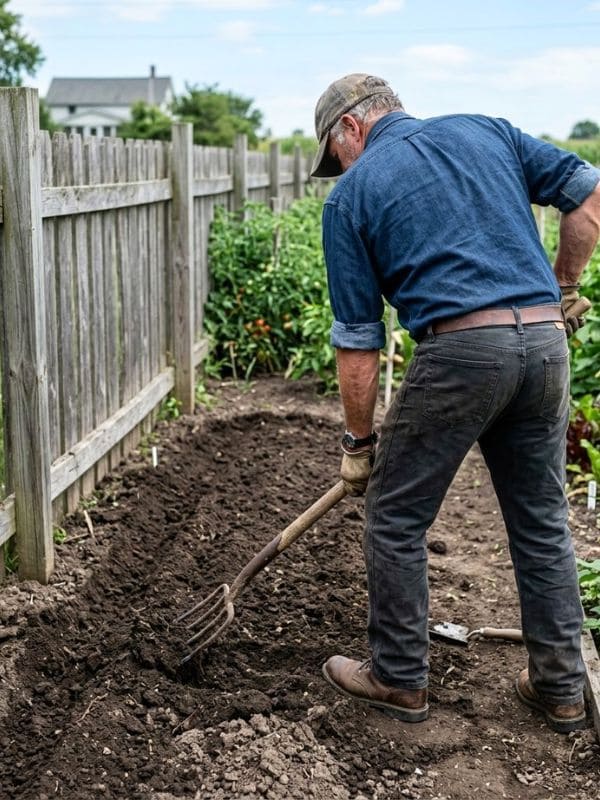
Loosen the soil to a depth of at least 25 to 30 centimeters. Use a garden fork or shovel to break apart compacted areas. Bulbs produce downward-growing roots that need loose soil to expand freely.
Also, remove stones, old roots, and debris that could block root growth.
Next, mix in mature compost thoroughly. A general recommendation is about 3 to 5 kilograms of compost per square meter.
Compost improves drainage, nutrient availability, and soil structure.
If your soil is clay-heavy or drains slowly, incorporate coarse sand to prevent water accumulation. Bulbs are extremely sensitive to standing water, which causes rot.
After mixing amendments, level the surface carefully. You can also lightly water the bed before placing trays so the soil is evenly moist but not muddy.
Step 2: Positioning the 30-Egg Tray on the Soil
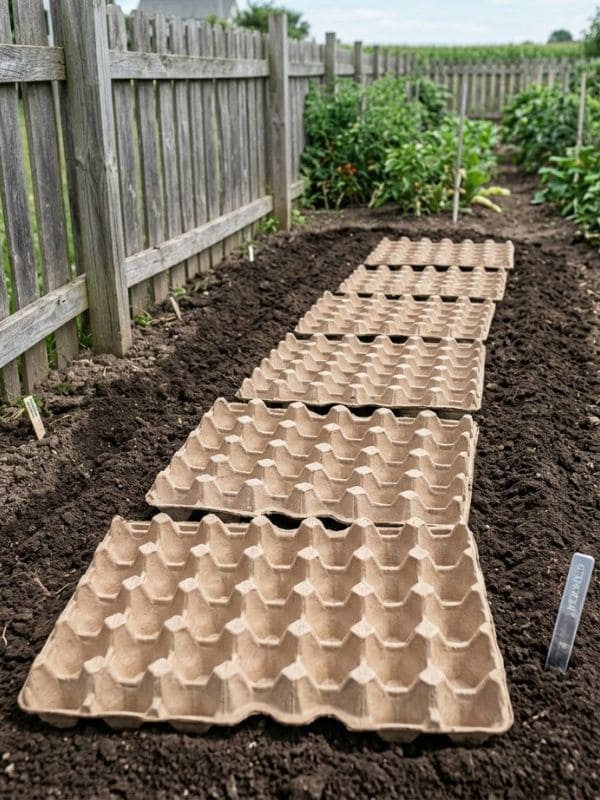
You place the cardboard tray directly onto the prepared soil surface.
Press down gently with both hands so every cell makes contact with the soil underneath. This step ensures roots can immediately penetrate downward once they begin forming.
If the tray rocks or leaves air spaces underneath, lift it and adjust the soil surface until it sits completely flat.
Multiple trays can be aligned end-to-end to create long, straight planting rows.
The grid automatically provides uniform spacing, typically around 5 to 6 centimeters between bulbs depending on tray design.
For larger bulbs, you may leave alternate cells empty to increase spacing.
Step 3: Adding Soil to the Compartments
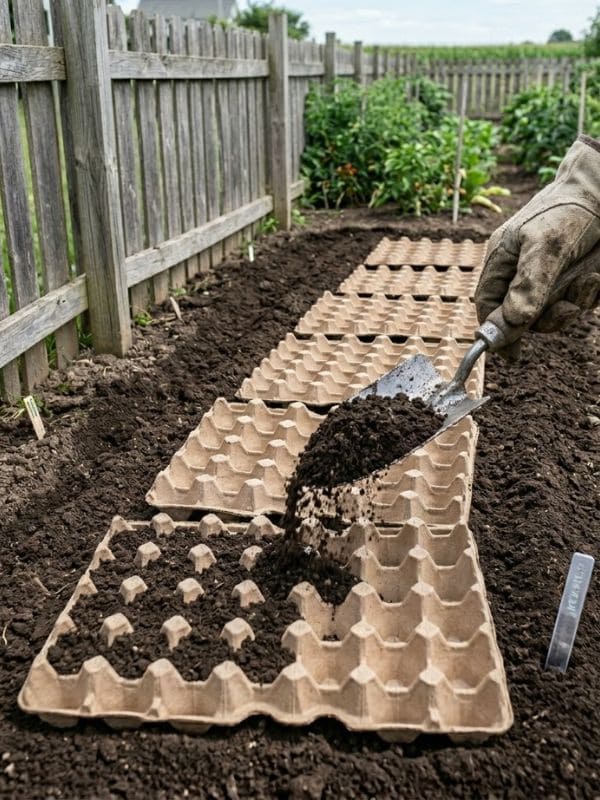
Now, add loose soil into each cell, filling about halfway to two-thirds full. The soil in the cell should connect directly with the soil beneath through the cardboard bottom.
Do not pack the soil tightly as roots require oxygen as well as moisture. Compacted soil reduces root expansion.
This upper soil layer serves two purposes. It stabilizes the bulb and maintains consistent moisture around its base during early growth.
Step 4: Correct Bulb Placement
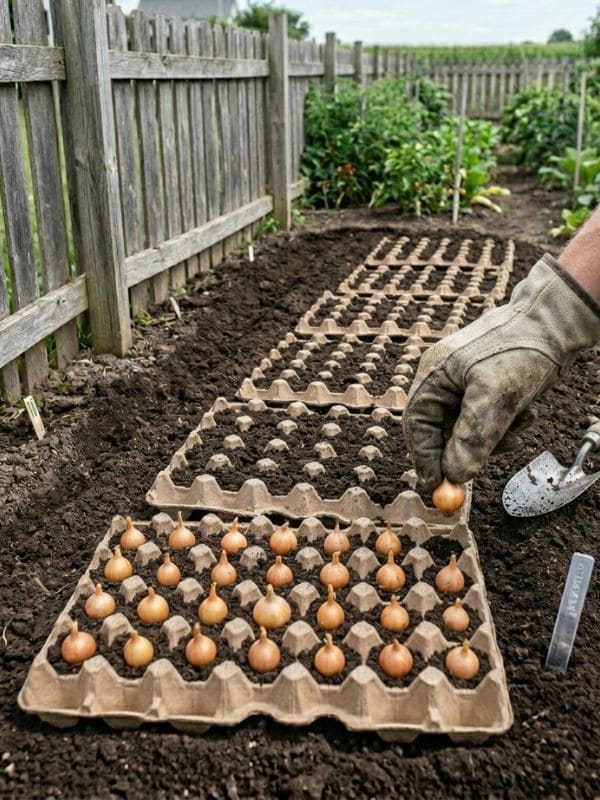
Place one bulb into each compartment. The root end must face downward while the pointed tip must face upward.
Press the bulb gently so the base touches the soil beneath the cardboard. Contact between bulb base and soil is essential for root development.
Do not bury the bulb deeply at this stage because most bulbs should remain partially visible above the soil line.
For tulips and lilies, if deeper planting is required later, additional soil can be added after root establishment.
Step 5: Securing the Tray
After planting all cells, you pull a small amount of soil along the outer edges of the tray row to anchor it in place.
The goal is stability, not burial. The tray should remain mostly visible on the surface while being secured from wind movement.
If strong winds are expected, lightly mound soil on corners temporarily.
Step 6: Watering Correctly
Water thoroughly after planting so moisture penetrates through the tray cells and into the soil beneath.
The cardboard absorbs moisture and distributes it evenly, but overwatering must be avoided.
Maintain consistent moisture during the first two weeks. The soil should feel damp about 2 to 3 centimeters below the surface, but not saturated.
During heavy rainfall periods, ensure water drains away freely from the bed.
What Happens Underground
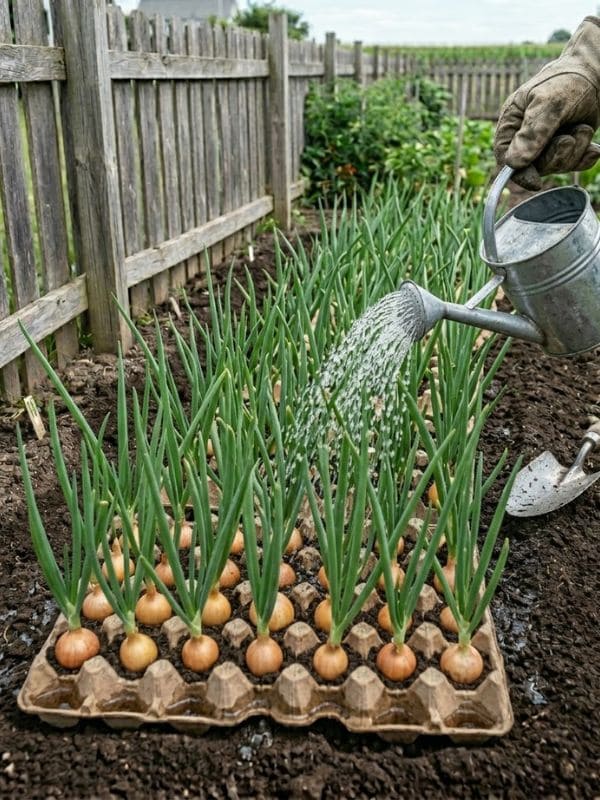
Within one to three weeks, depending on temperature and bulb type, roots begin forming at the base of each bulb.
These roots grow downward, pushing through the softened cardboard bottom and entering the garden soil.
As moisture and microbial activity break down the cardboard, the tray gradually decomposes. By the time bulbs are well established, the cardboard is no longer structurally important.
Because the bulbs were never lifted or transplanted, roots remain undisturbed, leading to faster establishment and stronger growth.
Adjusting for Different Bulb Requirements
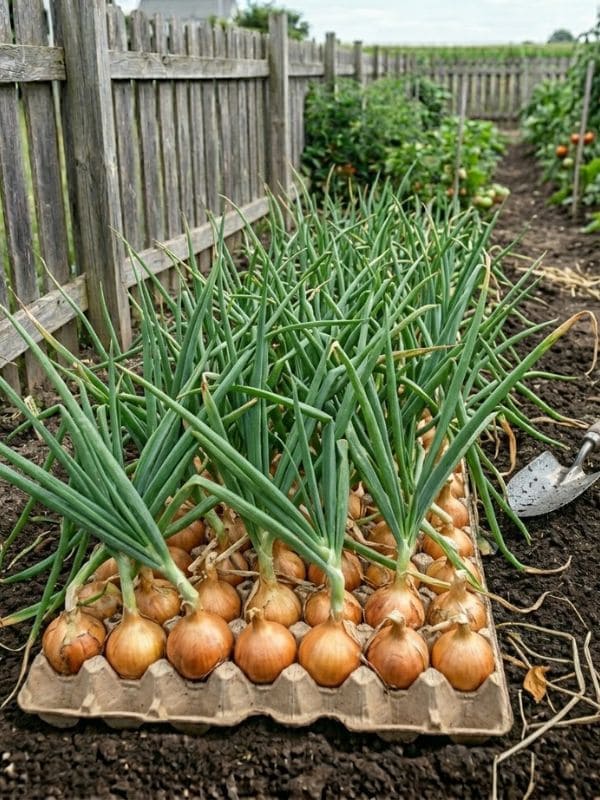
For onions and garlic, this method can remain unchanged throughout the growing season. These bulbs naturally prefer partial exposure and perform well with surface positioning.
For tulips, crocus, and lilies, which typically require deeper planting, you can gently add additional soil over the tray once shoots emerge and roots are established.
Alternatively, once roots penetrate through the tray, the entire section can be covered with additional soil to reach the recommended planting depth.
Always follow the recommended depth guideline for each bulb species while adapting the tray system to your conditions.
Ongoing Care
- Keep the bed weed-free. The tray provides mild early suppression, but weeds may appear as it decomposes.
- Water consistently, especially during active growth and bulb enlargement stages.
- Avoid excessive nitrogen fertilizer once bulbs begin swelling. Too much nitrogen encourages leaf growth rather than bulb formation.
- Allow flowering bulbs to complete their natural foliage cycle after blooming so energy returns to the bulb for the next season.
Read more: How To Grow Onions From Onions