For many sewists, pin cushions are more than simple tools, they become small companions that sit beside every project.
These handmade ideas bring warmth, creativity, and personality to your sewing space while keeping pins safe and easy to reach. F
Some feel playful, others feel timeless, but all are practical. Whether you sew daily or occasionally, these pin cushions are the kind you make when inspiration strikes again and again.
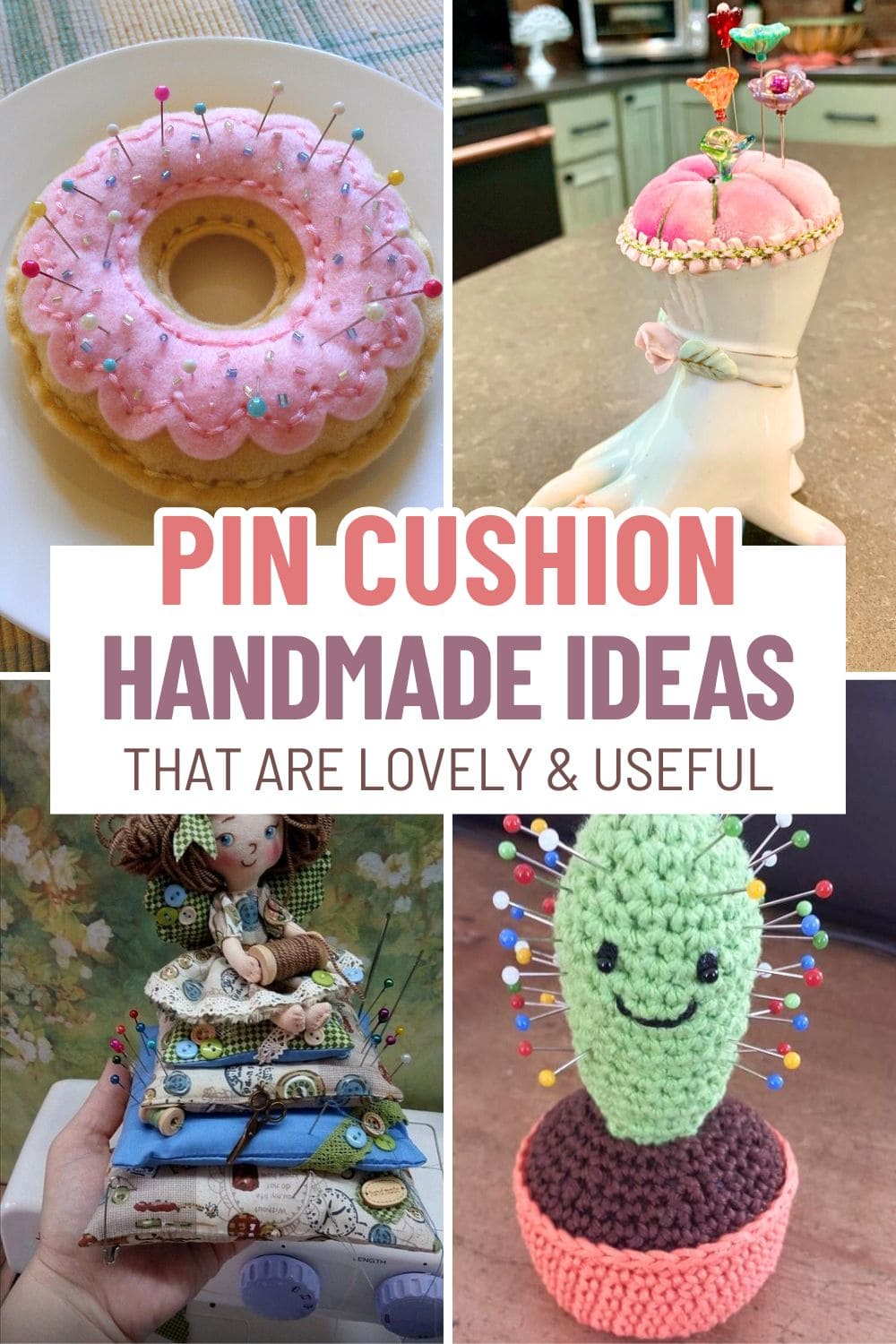
#1. Handmade Doll Pin Cushion Stack
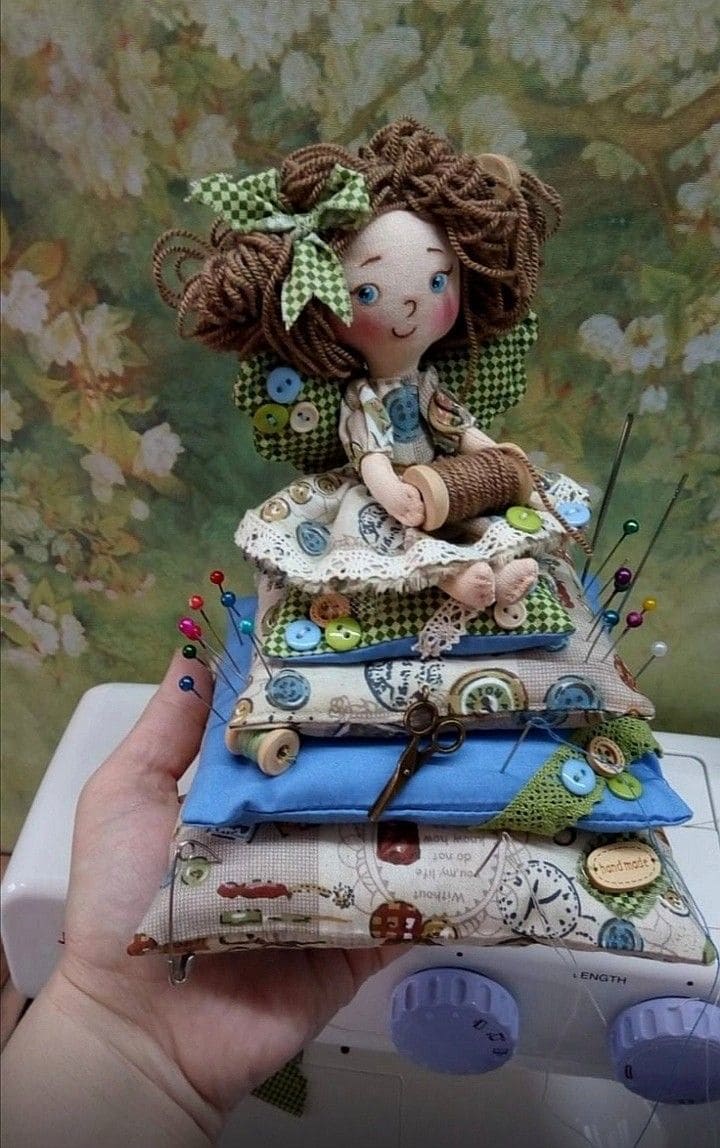
Sometimes sewing tools feel more special when they are part of a story, and this layered doll pin cushion does exactly that.
Soft fabric cushions stack neatly beneath a handcrafted doll, creating multiple pin-holding surfaces in one compact piece.
Buttons, lace, and stitched details give each layer its own character while keeping pins visible and easy to reach.
Materials Needed
- Cotton fabric scraps in coordinating patterns: 4 cushion rectangles, each 4 x 6 inches
- Polyester fiberfill stuffing, about 1½ cups total
- Felt or cotton fabric for doll body and dress: body pieces approx. 6 x 8 inches total
- Yarn or cord for hair, about 2-3 yards
- Embroidery floss for facial details, 12-18 inches
- Sewing thread, 30-40 inches
- Hand sewing needle
- Fabric scissors
- Assorted buttons, 10-15 pieces (varied sizes)
- Lace trim or ribbon, 12-18 inches
- Straight pins, 40-60 pieces
- Optional embellishments: small scissors charm, wooden spools, decorative labels
Step-by-step Guide
Step 1: Sew each fabric rectangle into a small pillow, stuffing firmly and closing securely to form stacked pin cushion layers.
Step 2: Attach decorative buttons and trims to each cushion layer before stacking to make pin placement easier later.
Step 3: Sew the doll body and dress, stuff lightly, embroider facial features, and attach yarn hair securely.
Step 4: Stitch the doll onto the top cushion layer, then sew the stacked cushions together through the center to keep them aligned.
Step 5: Insert pins across all cushion layers, spacing them evenly so each level can be used comfortably.
#2. Porcelain Hand Pin Cushion Stand
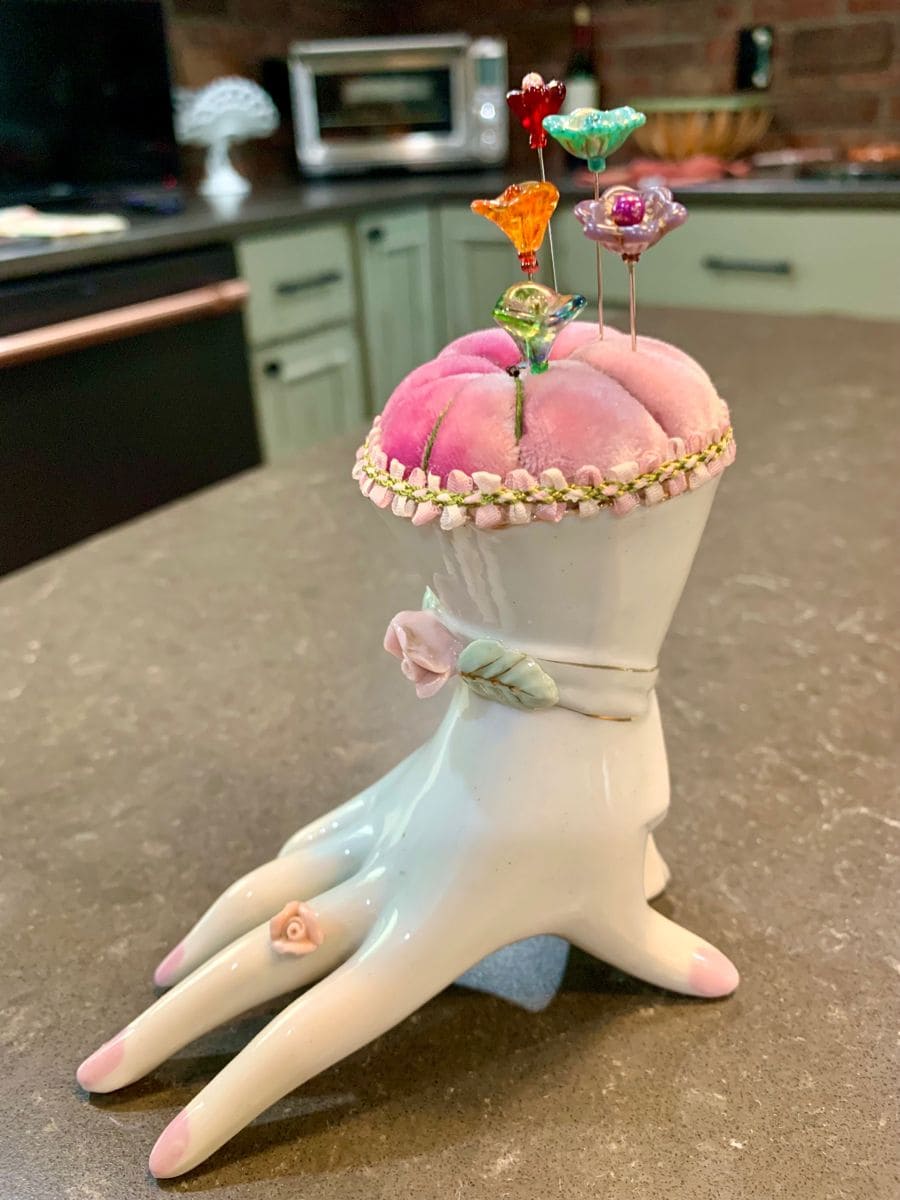
Inspired by vintage vanity pieces and delicate porcelain figurines, this pin cushion feels more like an art object than a sewing tool.
The sculpted hand base adds elegance and a touch of whimsy without overpowering the workspace.
Also, glass-topped pins stand tall like tiny flowers, making them easy to spot and grab.
Materials Needed
- 1 porcelain or ceramic hand-shaped stand (height: approx. 6-7 inches; flat or slightly recessed top opening: 2.5–3 inches diameter)
- Cotton or velvet fabric, 1 piece (6 x 6 inches)
- Polyester fiberfill stuffing, about ¾ cup
- Decorative trim or braid, 8-10 inches
- Strong sewing thread, 20-24 inches
- Hand sewing needle
- Fabric scissors
- Craft glue or museum putty, about ½ teaspoon
- Straight pins with decorative or glass heads, 20-30 pieces
- Optional embellishments: small fabric flower or ceramic accent, 1 piece
Step-by-step Guide
Step 1: Sew a loose running stitch around the edge of the fabric square, keeping stitches about ¼ inch from the edge.
Step 2: Pull the thread gently to form a pouch, add stuffing gradually, and shape it into a firm, rounded dome.
Step 3: Tighten the thread fully, knot securely, and adjust the stuffing so the cushion holds its segmented shape if desired.
Step 4: Attach decorative trim around the base of the cushion using small stitches or a thin line of glue.
Step 5: Secure the cushion onto the top of the porcelain stand with removable adhesive, then insert pins evenly across the surface.
#3. Smiling Crochet Cactus Pin Cushion
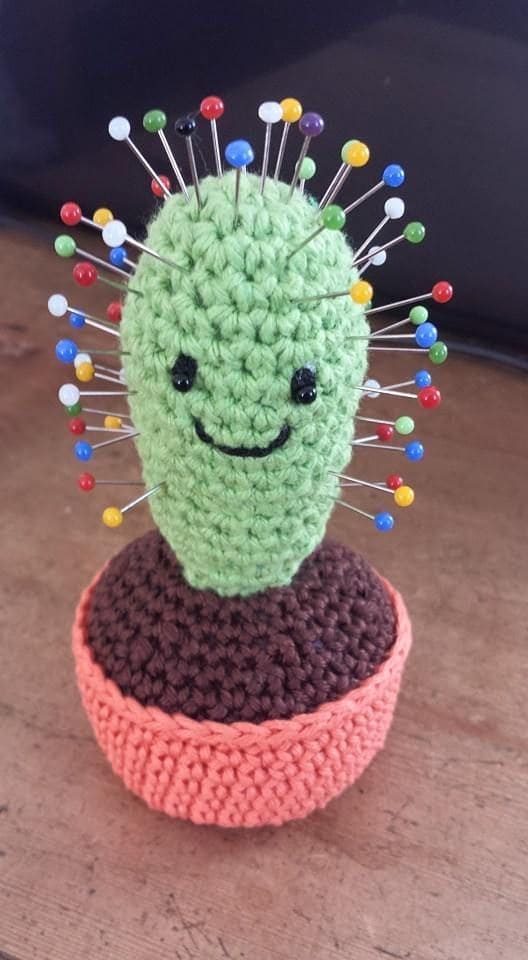
Haha, who knew a cactus could be this friendly and still help keep pins under control?
Bright pins sticking out like playful spines make this cushion impossible to overlook on a sewing table.
The crocheted texture holds pins firmly while the little stitched face adds humor without becoming distracting.
Materials Needed
- Yarn in 3 colors: (light green yarn for cactus body, approx. 25-30 grams, dark brown yarn for soil, approx. 15 grams, and peach or terracotta yarn for pot, approx. 20 grams)
- Crochet hook, size 3.5-4 mm
- Polyester fiberfill stuffing, about 1 cup total
- 2 small black safety eyes, 6-8 mm
- Black embroidery thread, 8-10 inches
- Yarn needle
- Scissors
- Straight pins with colored heads, 30-40 pieces
- Optional: small piece of cardboard circle, 2.5 inches diameter, for pot base support
Step-by-step Guide
Step 1: Crochet the cactus body in the round using tight single crochet stitches, shaping it into a rounded oval approximately 4–5 inches tall.
Step 2: Insert safety eyes and embroider a simple smile before stuffing firmly and closing the top.
Step 3: Crochet the soil circle and pot separately, increasing stitches to form a shallow bowl shape, then add cardboard at the base if extra stability is needed.
Step 4: Stuff the pot lightly, sew the cactus securely into the center, and close all openings neatly.
Step 5: Insert pins evenly around the cactus body, spacing them out so they resemble spines while staying easy to remove.
#4. Teacup Sewing Pin Cushion Holder
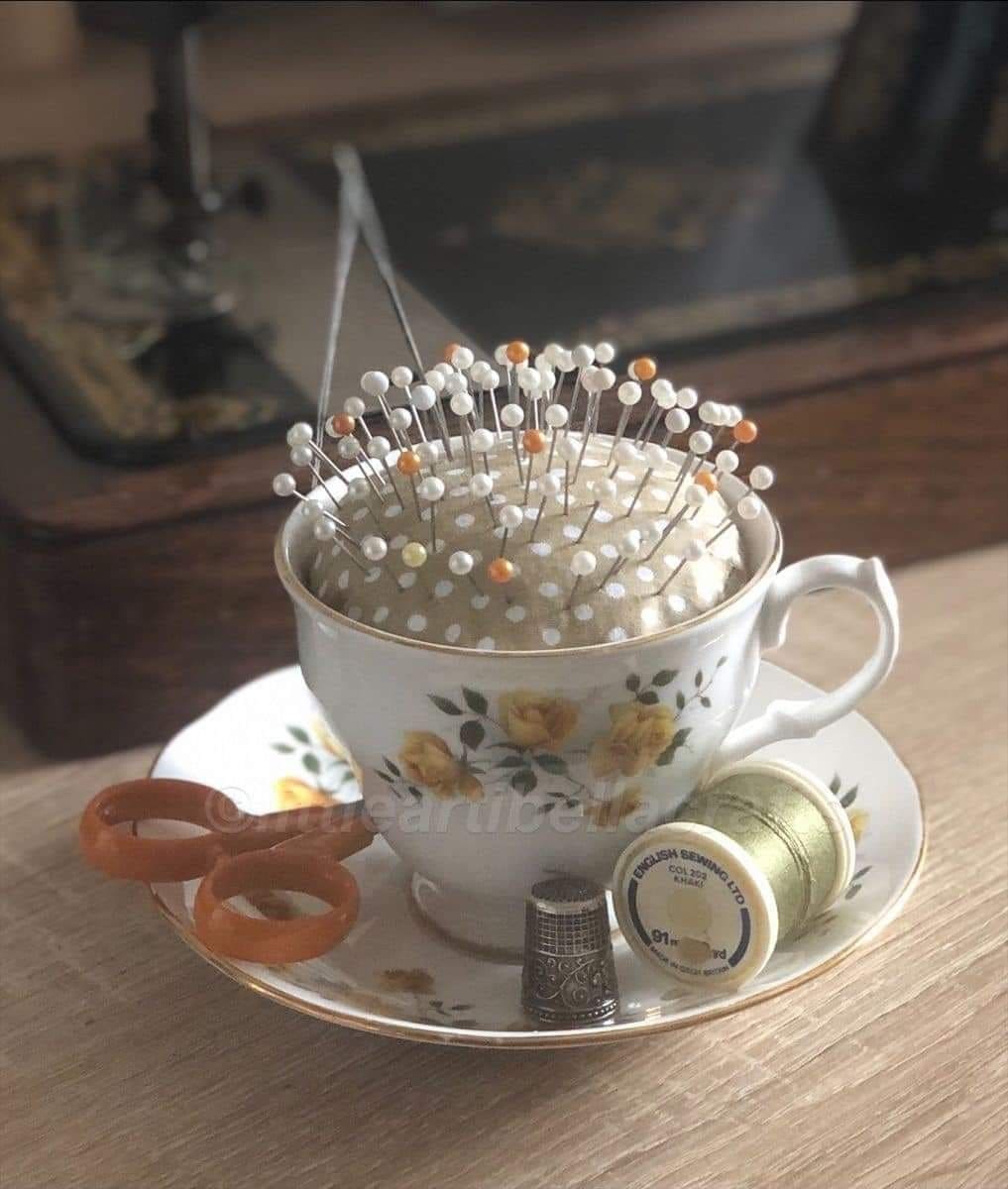
What about turning a quiet tea moment into a clever sewing setup? A soft fabric cushion tucked inside a teacup keeps pins upright, visible, and safely contained while working.
The saucer doubles as a landing spot for scissors, thread, and small notions, keeping everything within reach.
Floral china adds a gentle vintage charm that fits beautifully on a sewing table or shelf.
Materials Needed
- 1 teacup with saucer (cup opening approx. 3–3.5 inches wide, depth 2.5–3 inches)
- 1 cotton or linen fabric square, 6 x 6 inches
- Polyester fiberfill stuffing, about ¾ cup
- Matching sewing thread, about 24 inches
- 1 hand sewing needle
- Fabric scissors
- Craft glue or removable adhesive dots (optional, about 1 teaspoon)
- Straight pins, 25-40 pieces
- Optional sewing notions for saucer: 1 small pair of scissors (4 inches long), 1 spool of thread, 1 metal thimble
Step-by-step Guide
Step 1: Place the fabric square right side down and sew a loose running stitch around the edge, keeping the stitches about ¼ inch from the edge.
Step 2: Pull the thread gently to form a pouch, add fiberfill gradually, and shape it so the top is slightly domed.
Step 3: Tighten the thread fully and knot securely, adjusting the stuffing so the cushion fits snugly inside the teacup.
Step 4: Press the cushion into the cup, adding a small amount of removable adhesive underneath if extra stability is needed.
Step 5: Arrange pins evenly across the cushion and place scissors, thread, and other small tools on the saucer for a complete sewing station.
#5. Mini Dress Form Pin Cushion
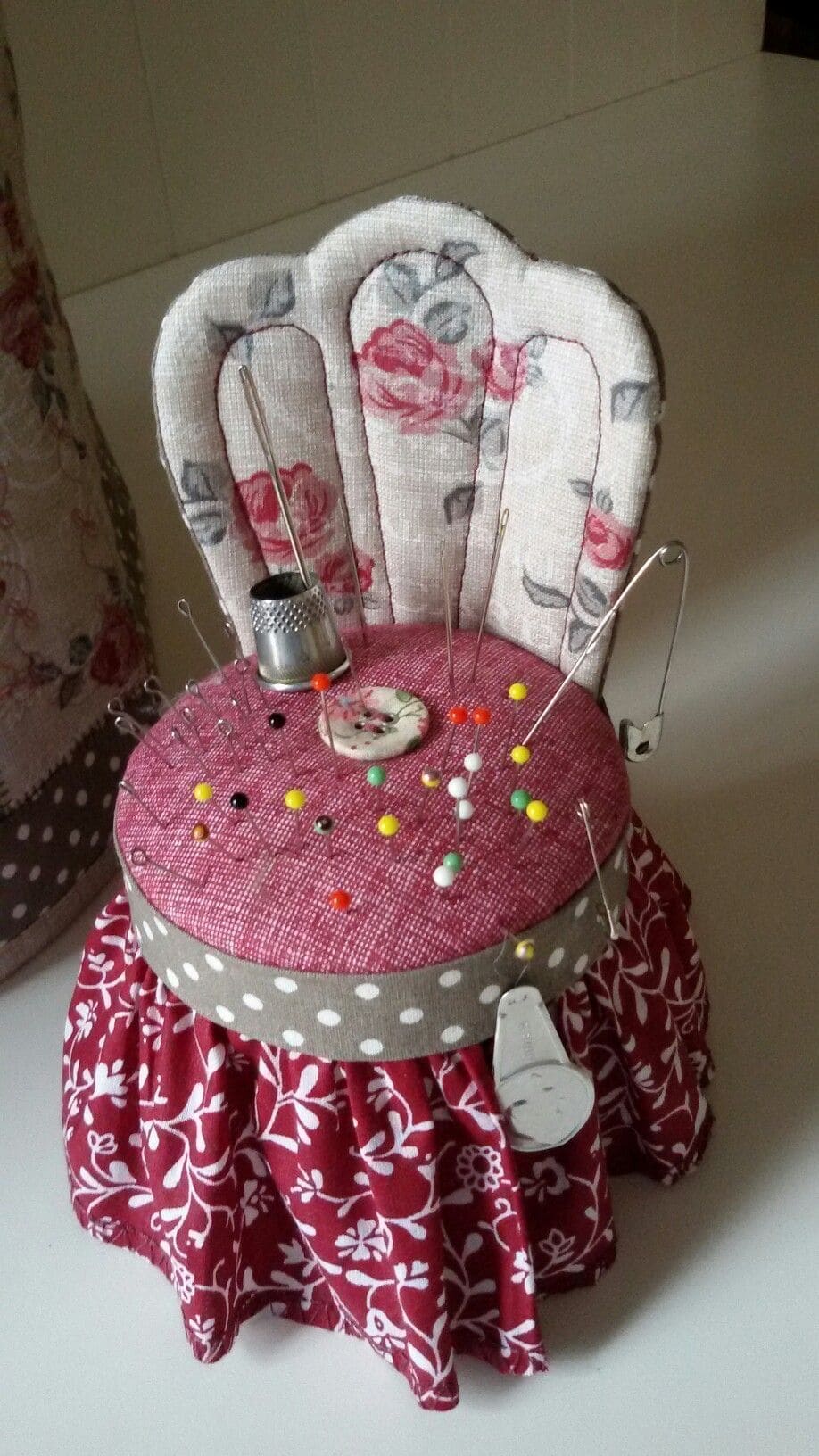
This dress-shaped design turns fabric scraps into a charming sewing companion that feels playful and practical at the same time.
Pins spread neatly across the padded top, while the skirt adds a soft, decorative base that keeps everything stable.
Extra details like buttons and pockets create spots to tuck needles or a thimble.
Materials Needed
- Cotton fabric for bodice and skirt: 1 bodice piece, 5 x 6 inches, 1 skirt rectangle, 6 x 14 inches
- Coordinating fabric for top cushion: 1 circle, 4.5 inches diameter
- Polyester fiberfill stuffing, about 1 cup total
- Fusible interfacing: 1 piece, 5 x 6 inches (for bodice)
- Sewing thread, matching or contrasting, 24-30 inches
- Hand sewing needle or sewing machine
- Fabric scissors
- Decorative button, 0.75-1 inch diameter
- Small fabric scraps for pockets or details (optional)
- Straight pins, 25-35 pieces
- Optional notions: Thimble, safety pin and small tag or label
Step-by-step Guide
Step 1: Fuse interfacing to the bodice fabric, then sew and lightly stuff it to create a firm, upright back shape.
Step 2: Gather the skirt rectangle along one long edge and stitch it to the lower edge of the bodice, forming a soft ruffle.
Step 3: Sew a running stitch around the fabric circle, stuff it firmly, and pull tight to create the rounded pin cushion top.
Step 4: Attach the cushion securely to the bodice front using tight stitches, making sure it sits centered and stable.
Step 5: Add decorative details, then insert pins evenly across the top and tuck small tools into the sides as desired.
#6. Denim Pocket Pin Cushion
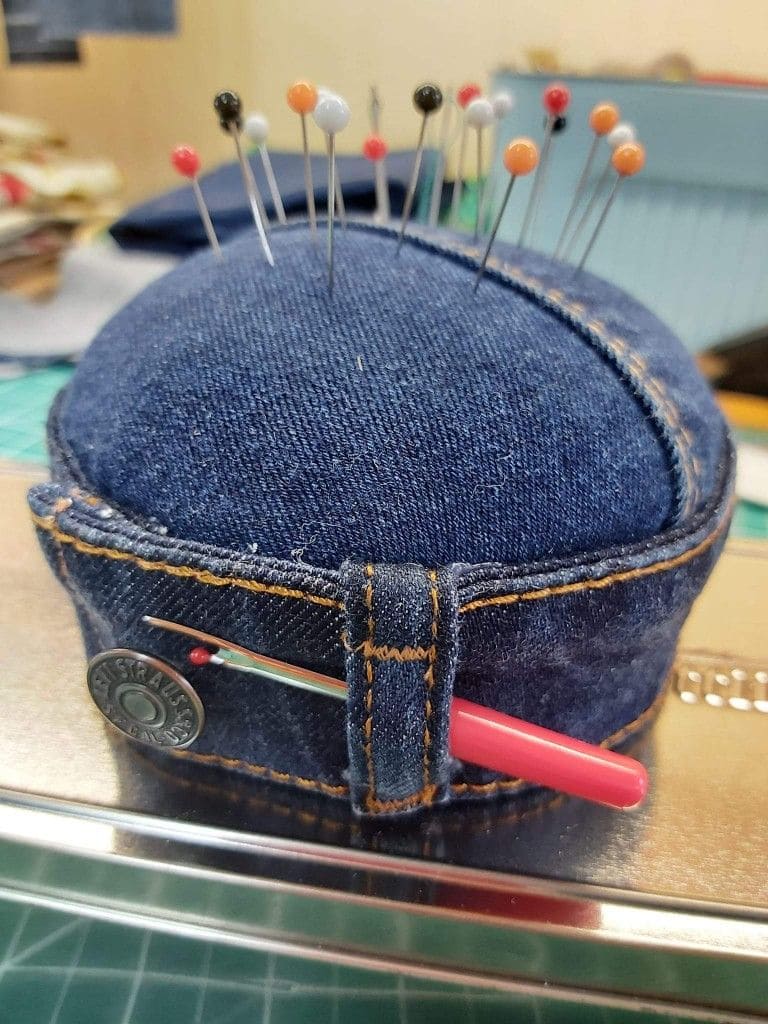
Have you ever reached for a pin and found it hiding somewhere it definitely should not be?
This denim pin cushion borrows the sturdy shape and details of a jeans pocket, making it both tough and familiar.
Thick fabric layers protect your fingers while holding pins securely in place. The side loop adds a smart spot for slipping in a marking pencil or small tool.
Materials Needed
- Denim fabric scraps: 1 top circle, 4 inches diameter, 1 bottom circle, 4 inches diameter, 1 side strip, 2 x 13 inches
- Polyester fiberfill stuffing, about ¾ cup
- Heavy-duty sewing thread (denim or upholstery thread), 24–30 inches
- Sewing needle or sewing machine
- Fabric scissors or rotary cutter
- Seam ripper (optional, for reclaimed denim)
- 1 small denim loop or fabric strip, 1 x 2.5 inches
- 1 metal button or rivet (optional), 0.75 inches diameter
- Straight pins, 25–35 pieces
- Optional marking pencil or seam ripper for side loop
Step-by-step Guide
Step 1: Sew the short ends of the side strip together to form a fabric ring, then attach it to the bottom circle with right sides together.
Step 2: Stitch around the edge, then sew the top circle to the open edge of the ring, leaving a 2-inch gap for turning.
Step 3: Turn the cushion right side out and stuff firmly, shaping the top into a gentle dome.
Step 4: Insert the fabric loop into the side seam opening and stitch the gap closed securely by hand or machine.
Step 5: Add a decorative button if desired, then insert pins evenly across the top and slide a pencil or tool into the loop.
#7. Mini Sneaker Pin Cushion Holder
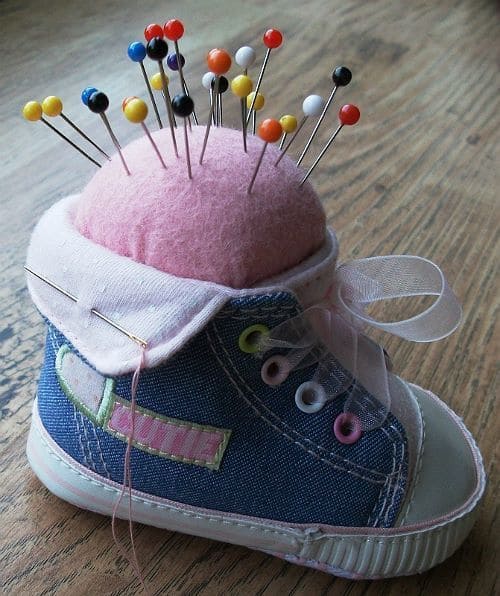
Who would expect a tiny shoe to double as a sewing essential? This playful pin cushion uses a soft sneaker shape to hold pins securely while adding a fun, casual touch to the workspace.
The padded top keeps pins upright and easy to grab, while the fabric sides give it stability on a table or shelf.
Small details like laces and stitching make it feel thoughtfully handmade rather than purely practical.
Materials Needed
- Cotton or denim fabric for sneaker body: 2 side pieces, each approx. 4 x 3 inches, 1 sole piece, approx. 4.5 x 2 inches
- Felt fabric for pin cushion top: 1 oval or circle, approx. 3.5 x 3 inches
- Polyester fiberfill stuffing, about ¾ cup total
- Fusible interfacing: 2 pieces, each 4 x 3 inches
- Sewing thread, matching or contrasting, 24–30 inches
- Hand sewing needle or sewing machine
- Fabric scissors
- Decorative ribbon or lace for laces, 8-10 inches
- Small decorative buttons or eyelets, 4-6 pieces
- Straight pins, 25-35 pieces
Step-by-step Guide
Step 1: Fuse interfacing to the wrong side of the sneaker side pieces, then sew the sides together, leaving the top open.
Step 2: Attach the sole piece to the sneaker body, stitching carefully around the edges and turning right side out.
Step 3: Stuff the sneaker body lightly to help it hold shape and stand upright.
Step 4: Sew a running stitch around the felt piece, stuff firmly, and pull tight to form a domed pin cushion top.
Step 5: Stitch the cushion securely into the sneaker opening, add decorative laces and buttons, then insert pins evenly across the top.
#8. Donut-Shaped Felt Pin Cushion
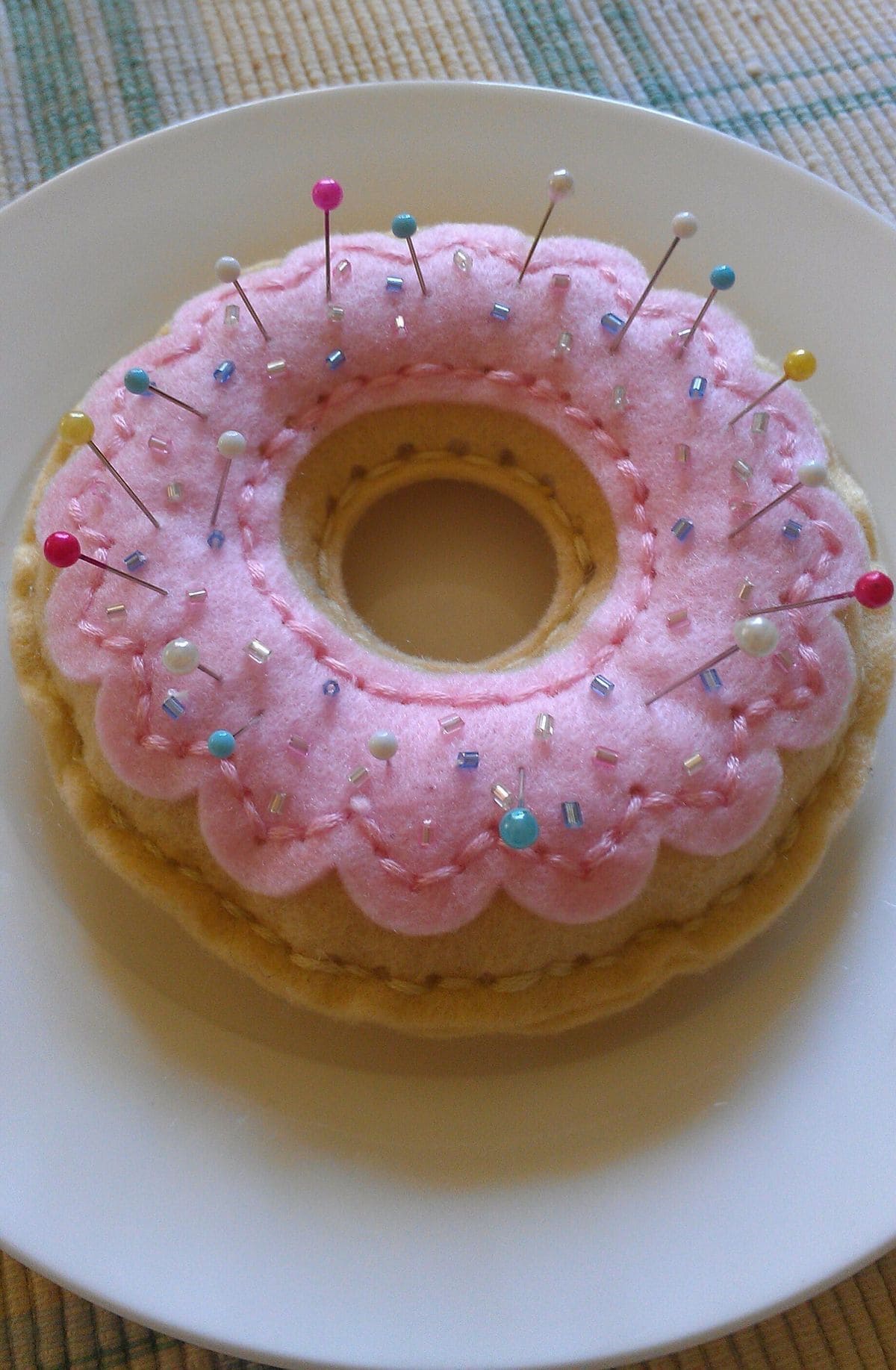
This donut-shaped pin cushion plays with that exact moment of confusion in the best way.
Soft felt layers and pastel beads give it a sugary look, while the open center keeps pins spaced evenly and easy to grab.
The stitched frosting edge adds texture and helps the cushion hold its shape over time.
Materials Needed
- Felt sheets in 2 colors: 1 light brown felt circle, 4.5 inches diameter, 1 light brown felt circle, 3 inches diameter (center cut-out), 1 pink felt circle, 4 inches diameter, and 1 pink felt circle, 2.5 inches diameter (center cut-out)
- Polyester fiberfill stuffing, about 1 cup
- Matching embroidery thread (pink and light brown), about 24 inches each
- Hand sewing needle
- Fabric scissors
- Straight pins with decorative heads, 30-40 pieces
- Small glass seed beads (optional), about 1-2 teaspoons
- Plate or round template for tracing circles
Step-by-step Guide
Step 1: Cut all felt circles and carefully cut out the center holes to create donut shapes for both the base and frosting layers.
Step 2: Place the pink felt donut on top of the brown felt donut and loosely stitch around the inner and outer edges using a running stitch.
Step 3: Begin stuffing the space between the layers evenly, working slowly around the ring to keep the shape balanced.
Step 4: Continue stitching until the opening is closed, adjusting the stuffing as needed so the cushion feels firm but not stiff.
Step 5: Add decorative beads by stitching them lightly onto the pink felt, then insert pins evenly around the top to finish the look.
#9. Fold-Open Sewing Book Pin Cushion
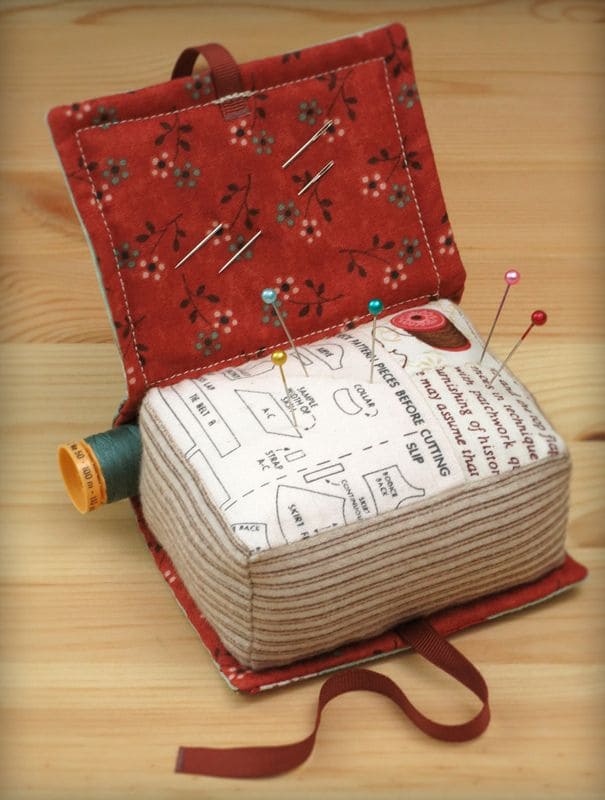
Just opening this little fabric book already feels like settling into a sewing session.
The fold-out design keeps pins neatly stored inside while protecting sharp tips when it is closed.
Pattern-print fabric on the cushion adds a thoughtful, handmade touch that feels fitting for a sewing space.
Materials Needed
- Cotton fabric for outer cover, 2 pieces (6 x 6 inches)
- Cotton fabric for pin cushion center, 1 piece (5 x 5 inches)
- Coordinating fabric for lining, 2 pieces (6 x 6 inches)
- Polyester fiberfill stuffing, about 1 cup
- Fusible interfacing, 2 pieces (6 x 6 inches)
- Sewing thread, matching or contrasting, 24-30 inches
- Hand sewing needle or sewing machine
- Fabric scissors or rotary cutter
- Ribbon ties, 2 pieces (10-12 inches long)
- Straight pins, 20-30 pieces
- Optional: small thread spool for side storage
Step-by-step Guide
Step 1: Fuse interfacing to the wrong side of both outer cover fabric pieces to add structure.
Step 2: Sew the cushion fabric into a small box shape, stuff firmly, and close the opening securely.
Step 3: Center the stuffed cushion onto one lining piece and stitch it in place around the base.
Step 4: Layer outer cover and lining pieces right sides together, insert ribbon ties at the edges, then sew around the perimeter, leaving a small opening to turn.
Step 5: Turn right side out, press gently, topstitch if desired, and insert pins into the cushion before folding closed.
#10. Button-Centered Patchwork Pin Cushions
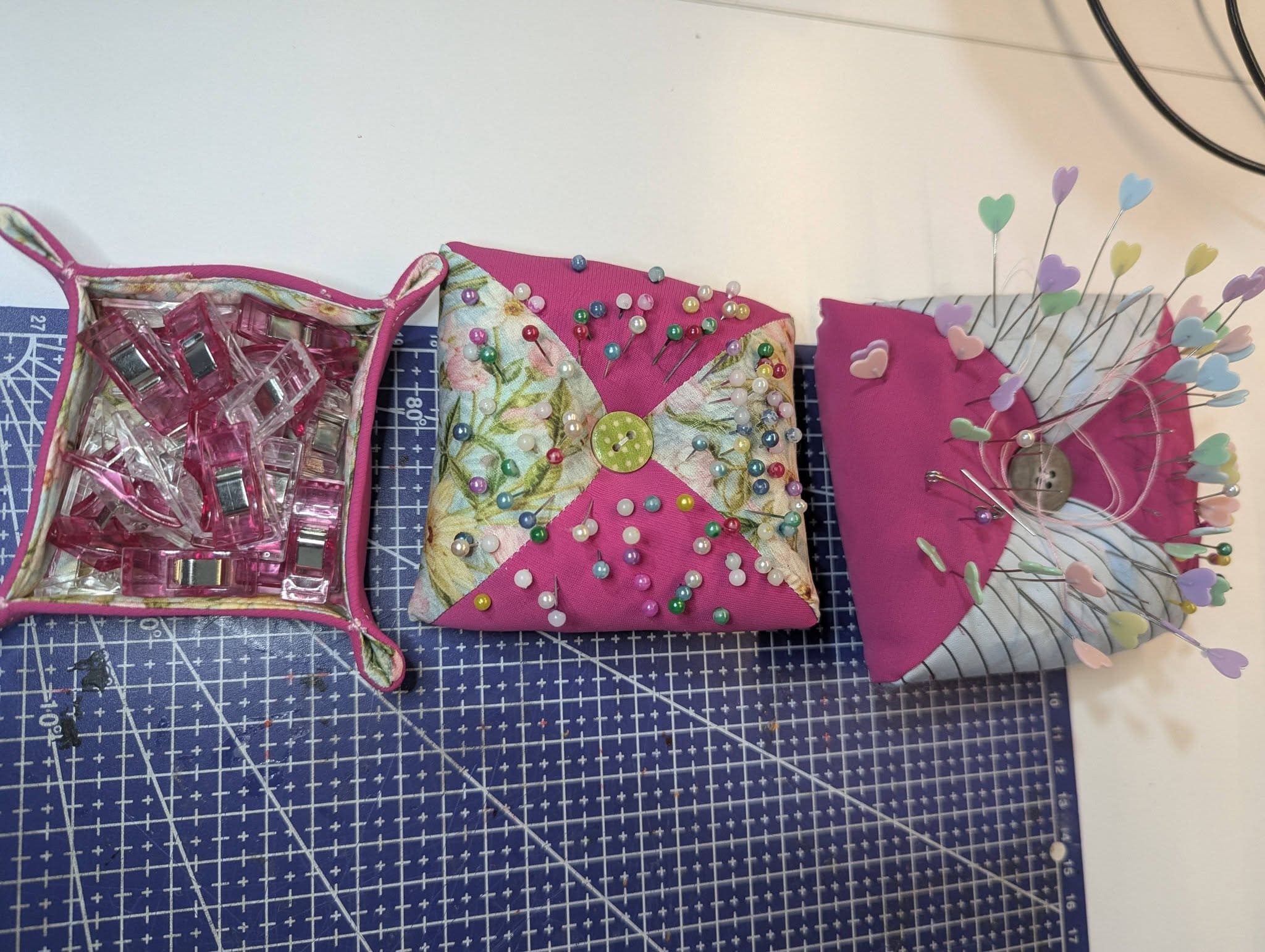
Ever notice how small sewing tools can quietly take over your workspace? These patchwork pin cushions bring everything back into order while adding a cheerful pop of color to your table.
The bold pink fabric mixed with soft florals makes each cushion easy to spot, even when your desk gets busy.
The center button is not just decorative, it helps keep the layers secure and gives the cushion a sturdy, balanced shape.
Materials Needed
- Cotton fabric scraps in 2 patterns (pink and floral), cut into: 4 squares, each 3 x 3 inches (for patchwork top) and 1 square, 4.5 x 4.5 inches (for backing)
- Polyester fiberfill stuffing, about ¾ cup per cushion
- 1 button, 0.75-1 inch diameter
- Strong sewing thread, 18-24 inches
- Hand sewing needle or sewing machine
- Straight pins or clips (20-30 pieces)
- Fabric scissors or rotary cutter
- Optional: fusible interfacing, 4.5 x 4.5 inches, for extra firmness
Step-by-step Guide
Step 1: Arrange the four small fabric squares into a pleasing pattern and sew them together to form one 4.5 x 4.5 inch top panel.
Step 2: Place the patchwork top and backing fabric right sides together, pin, and sew around the edges with a ¼ inch seam, leaving a 2-inch opening.
Step 3: Turn the cushion right side out, gently push out the corners, and stuff firmly with polyester filling until slightly domed.
Step 4: Hand stitch the opening closed using small, tight stitches.
Step 5: Thread a needle with doubled thread, sew through the center from back to front, add the button, and pull tight to create a slight indentation before knotting securely on the back.
#11. Owl-Themed Felt Pin Cushion
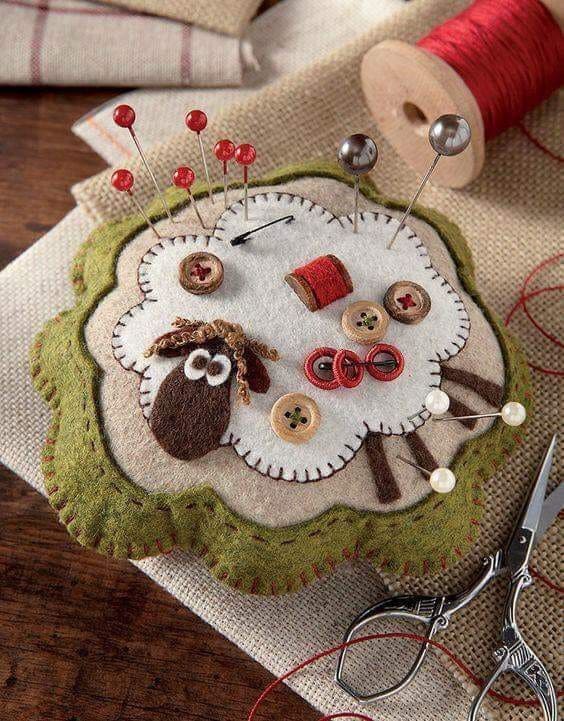
If a pin cushion could tell a story, this one would feel straight out of a cozy craft corner.
Layered felt shapes, buttons, and stitching turn everyday sewing supplies into a small handmade scene.
Pins sit securely across the soft surface, while decorative elements help keep needles and clips visible.
Materials Needed
- Felt sheets in 3-4 colors (neutral, green, brown, accent colors): 1 base circle, 5 inches diameter,1 top circle, 4 inches diameter and scrap felt pieces for decoration (small shapes, approx. 1-2 inches each)
- Polyester fiberfill stuffing, about ¾ cup
- Embroidery floss in coordinating colors, 24–30 inches total
- Sewing thread, 18-24 inches
- Hand sewing needle
- Fabric scissors
- Assorted buttons: 4-6 buttons, sizes 0.5-0.75 inch
- Decorative felt shapes or appliqués (optional), 1-2 pieces
- Straight pins, 25-35 pieces
- Optional sewing tools for styling: small scissors and spool of thread
Step-by-step Guide
Step 1: Cut the felt base and top circles, then layer them with the top centered over the base.
Step 2: Stitch decorative details onto the top circle first, including buttons and small felt shapes.
Step 3: Sew the top and base together using a blanket stitch, leaving a 2-inch opening.
Step 4: Stuff firmly with fiberfill, shaping the cushion into a gentle dome, then stitch the opening closed.
Step 5: Insert pins evenly across the surface, spacing them around the decorative elements for easy access.
#12. Spool Pedestal Pin Cushion Station
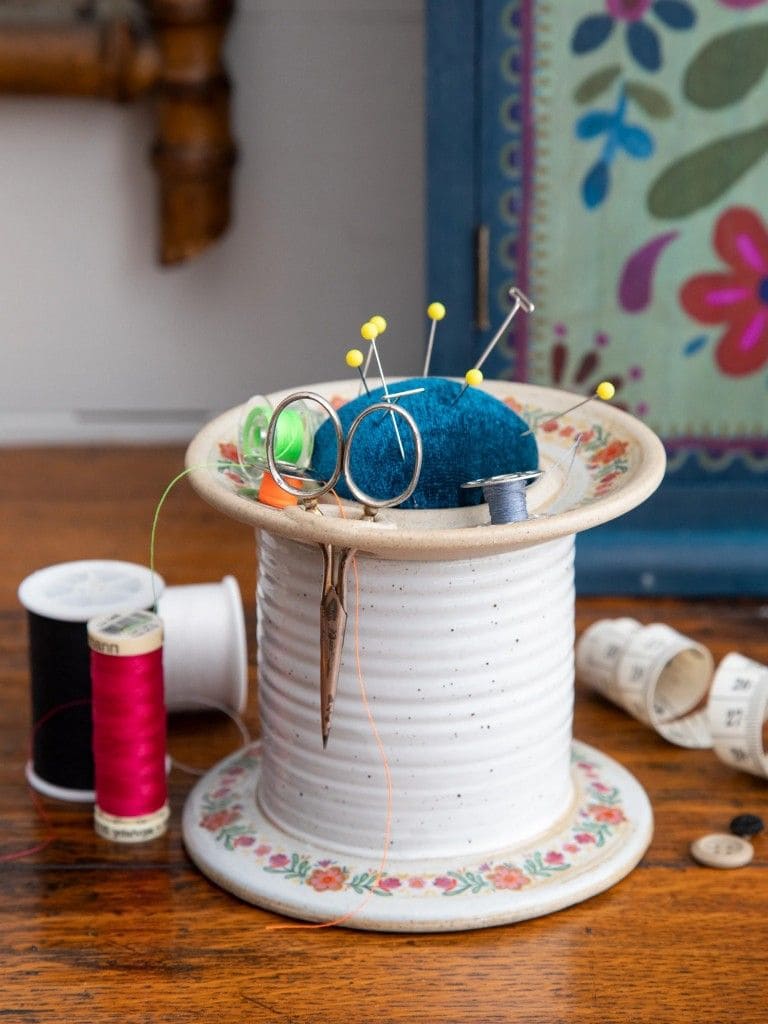
This raised pin cushion sits neatly on top of a wide spool base, keeping pins, scissors, and thread within easy reach.
The elevated height makes grabbing pins more comfortable, especially during longer sewing sessions.
Small tools can rest along the rim, turning the base into a compact workstation rather than just a holder.
Materials Needed
- 1 large wooden or ceramic thread spool base: approx. 4-5 inches tall, top opening 2.5-3 inches wide
- 1 felt or velvet fabric circle, 6 inches diameter
- Polyester fiberfill stuffing, about ¾ cup
- Strong sewing thread, 20-24 inches
- Hand sewing needle
- Fabric scissors
- Craft glue or removable adhesive, about 1 teaspoon
- Straight pins, 25-35 pieces
- Optional accessories: small embroidery scissors, 3.5-4 inches long and mini thread spools, assorted colors
Step-by-step Guide
Step 1: Sew a loose running stitch around the edge of the fabric circle, keeping stitches about ¼ inch from the edge.
Step 2: Pull the thread gently to form a pouch, add stuffing gradually, and shape into a firm dome slightly wider than the spool opening.
Step 3: Tighten the thread fully and knot securely, adjusting stuffing so the cushion holds its shape.
Step 4: Apply a thin layer of craft glue to the top of the spool base and press the cushion into place, centering it carefully.
Step 5: Insert pins evenly across the cushion and arrange scissors or thread along the rim to complete the sewing station.
#13. Decorated Jar Pin Cushion Organizer
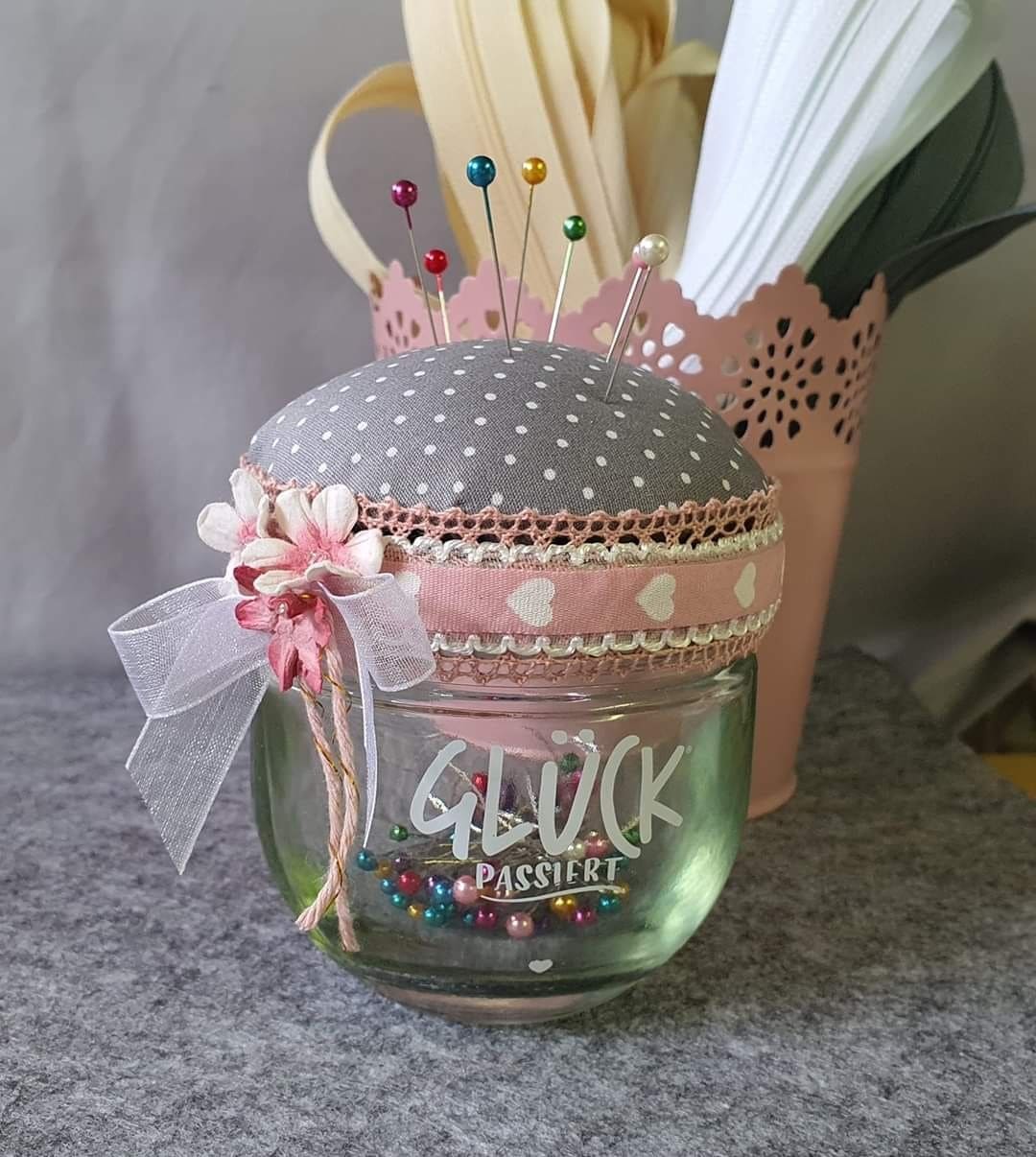
Wow, this little jar manages to look charming and practical at the same time.
A soft fabric dome on top keeps pins secure, while the clear glass base turns unused space into handy storage for beads or small notions.
Lace, ribbon, and a delicate bow give it a gift-like feel that works beautifully on a craft desk or shelf. Pins stay visible and easy to grab without cluttering the workspace.
Materials Needed
- 1 glass jar with wide opening: diameter 3-3.5 inches, height 3-4 inches
- Cotton fabric, 1 piece (6 x 6 inches)
- Polyester fiberfill stuffing, about ¾ cup
- Decorative ribbon or lace trim, 12-14 inches
- Small artificial flower or bow, 1 piece
- Strong sewing thread, 20-24 inches
- Hand sewing needle
- Fabric scissors
- Craft glue, about 1 teaspoon
- Straight pins with decorative heads, 25-35 pieces
- Optional filler for jar base: small beads or buttons, about 2-3 tablespoons
Step-by-step Guide
Step 1: Sew a loose running stitch around the edge of the fabric square, keeping stitches about ¼ inch from the edge.
Step 2: Pull the thread gently to form a pouch, add stuffing gradually, and shape it into a firm dome slightly wider than the jar opening.
Step 3: Tighten the thread fully, knot securely, and adjust stuffing so the cushion holds its shape.
Step 4: Glue the ribbon or lace trim around the base of the cushion, then attach the small flower or bow to one side.
Step 5: Place optional beads into the jar, glue the cushion onto the jar opening, and insert pins evenly across the top.
#14. Classical Bust Pin Cushion Display
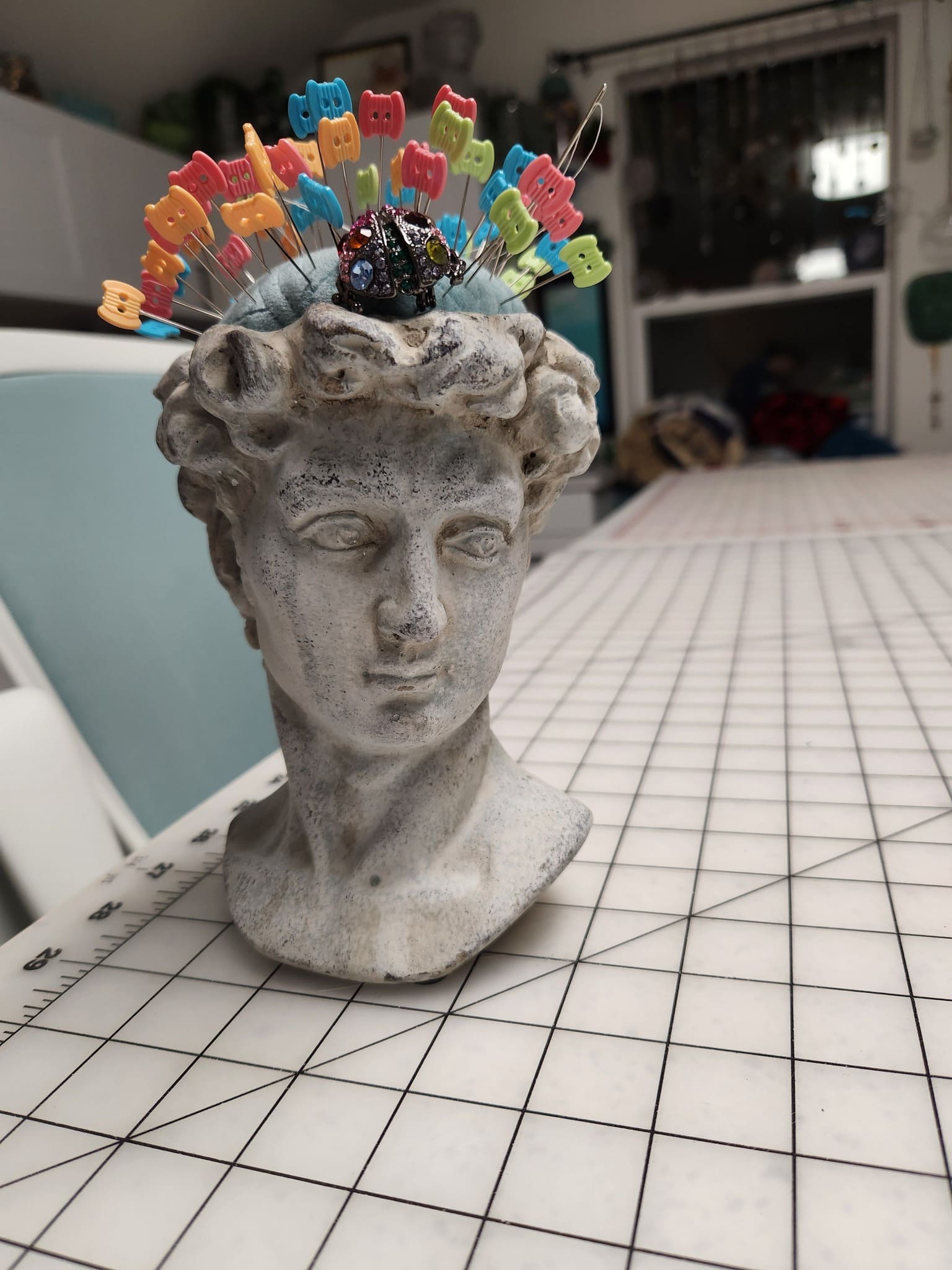
This pin cushion turns a small decorative bust into a functional sewing companion with a playful twist.
The soft cushion sits neatly on top, making the pins look like a colorful crown.
This is a great way to repurpose a décor piece you already own into something useful.
Materials Needed
- 1 small decorative bust statue (approx. 5-7 inches tall, flat or slightly recessed top)
- 1 round fabric pin cushion or handmade fabric circle (diameter 2.5-3 inches)
- Polyester stuffing, about ½ cup
- 1 fabric circle (cotton or linen, 4.5 inches diameter)
- 1 strong craft glue or epoxy adhesive (about 1 tablespoon)
- 20-40 sewing pins (standard length 1.5 inches)
- Optional: 1 decorative brooch or charm (1-1.5 inches wide)
Step-by-step Guide
Step 1: If making the cushion, stitch a loose running stitch around the edge of the fabric circle, pull it tight, and stuff it firmly with polyester filling.
Step 2: Secure the opening by pulling the thread tight and knotting it several times so the cushion keeps its shape.
Step 3: Apply a thin, even layer of craft glue to the top of the bust and press the cushion into place, centering it carefully.
Step 4: Let the glue cure fully according to the adhesive instructions, usually 12–24 hours.
Step 5: Insert pins evenly around the cushion and add a decorative brooch on top if desired for extra personality.
#15. Embroidered Tray Pin Cushion Display
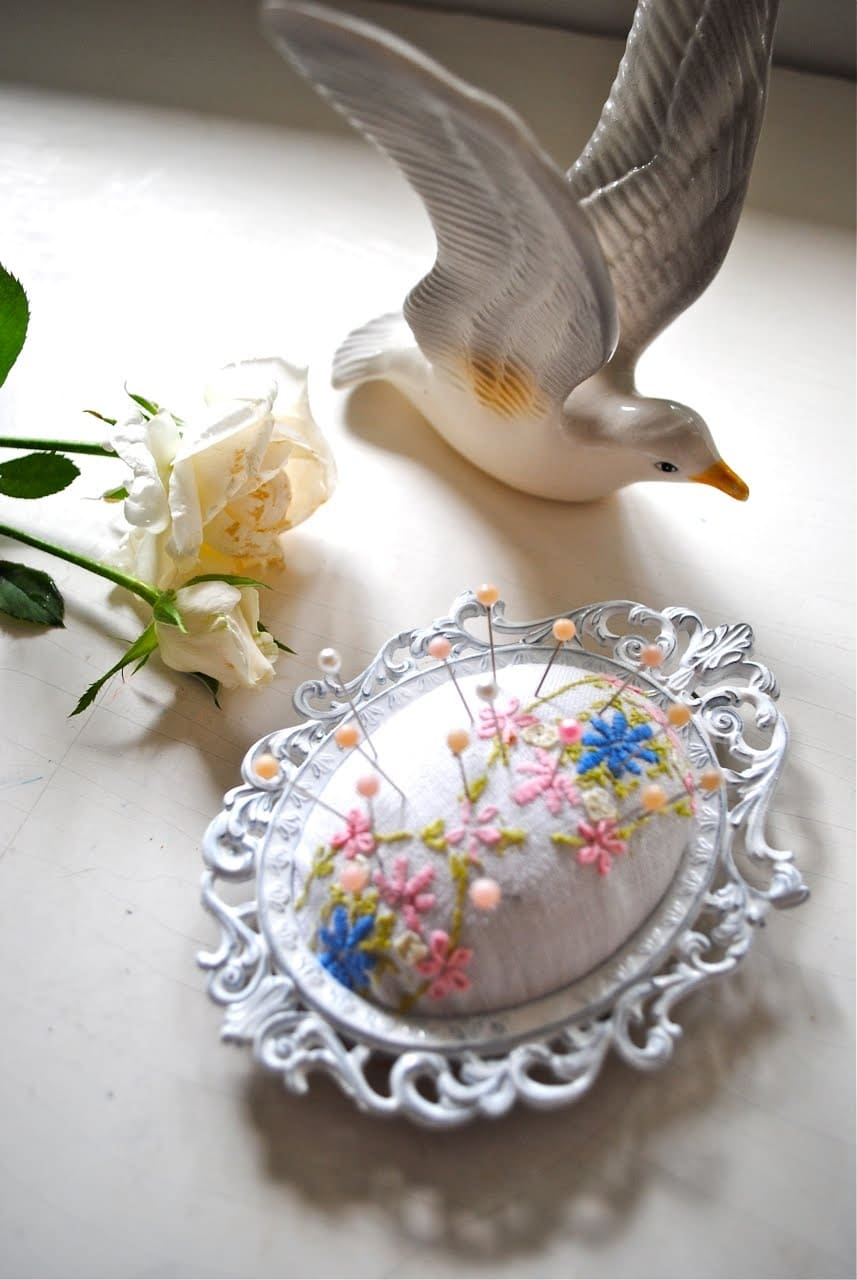
To bring a softer, more decorative touch to everyday sewing, this embroidered pin cushion rests inside an ornate tray like a small keepsake.
Delicate floral stitching adds texture while keeping pins firmly anchored and easy to see.
The shallow tray prevents pins from rolling away and gives the piece a finished, intentional look.
Materials Needed
- Linen or cotton fabric, 1 piece (6 x 6 inches)
- Embroidery floss in 3-4 colors, approx. 24 inches per color
- Embroidery needle
- Polyester fiberfill stuffing, about ¾ cup
- Matching sewing thread, 20-24 inches
- Hand sewing needle
- Fabric scissors
- Decorative metal or resin tray: inner opening approx. 4-4.5 inches wide
- Craft glue or museum putty, about ½ teaspoon
- Straight pins, 25-35 pieces
- Optional embroidery hoop, 4 inches diameter, for stitching support
Step-by-step Guide
Step 1: Embroider the floral design onto the center of the fabric square, keeping stitches relatively flat so pins can still insert easily.
Step 2: Sew a loose running stitch around the fabric edge, about ¼ inch from the edge, then gently pull to form a pouch.
Step 3: Fill with stuffing gradually, shaping the cushion into a firm dome that fits snugly inside the tray opening.
Step 4: Pull the thread tight, knot securely, and adjust the shape so the embroidered surface stays smooth.
Step 5: Secure the cushion into the tray with a small amount of adhesive and insert pins evenly across the top.
#16. Vintage Glass Jar Lid Pin Holders
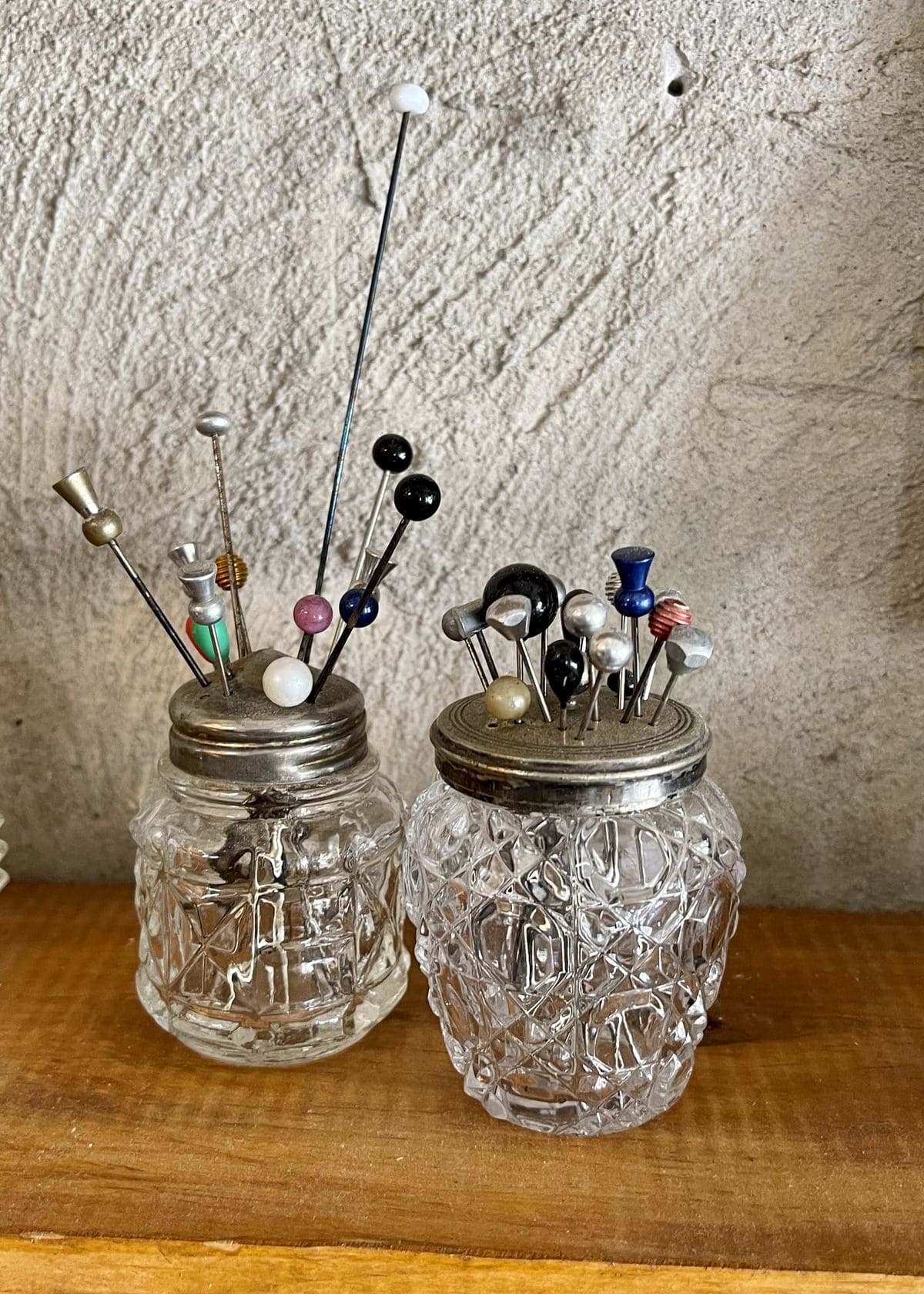
With just a few small jars and a bit of creativity, pin storage can look surprisingly refined.
These textured glass jars use their metal lids as sturdy pin holders, keeping sharp points upright and easy to see.
Different pin styles can be separated by jar, which helps when switching between projects. The clear glass adds a decorative touch while still letting you spot contents at a glance.
Materials Needed
- 2 small glass jars with metal screw-on lids (Jar height: 2.5-3 inches and lid diameter: 2-2.25 inches)
- Thick cork sheet or dense foam: 2 circles, each matching lid diameter (thickness: 0.5-0.75 inches)
- Strong craft glue or epoxy, about 1 teaspoon per lid
- Utility knife or sharp scissors
- Ruler
- Straight pins, assorted styles, 20-30 per jar
- Optional contents for jars: spare buttons, beads, or needles, 1-2 tablespoons per jar
Step-by-step Guide
Step 1: Trace the inside of each metal lid onto the cork or foam and cut out circles to fit snugly.
Step 2: Apply a thin layer of strong glue inside each lid and press the cork or foam circle firmly into place.
Step 3: Allow the adhesive to cure fully according to manufacturer instructions, usually 12–24 hours.
Step 4: Screw the lids back onto the jars once dry, ensuring they sit flat and secure.
Step 5: Insert pins evenly into the cork surface and use the jar bases to store small sewing supplies.
#17. Vintage Toy Car Pin Cushion
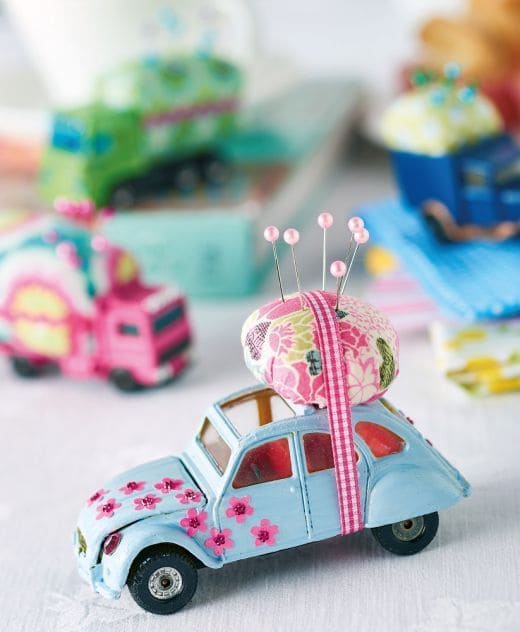
Even the smallest decorative toys can turn into surprisingly useful sewing helpers. A soft fabric pin cushion strapped to the roof gives this little car a new purpose without losing its charm.
Pins stay visible and easy to grab, while the car itself adds a playful, nostalgic touch to the workspace.
Using ribbon instead of glue keeps the setup flexible and easy to change later.
Materials Needed
- 1 small toy car (length 4-5 inches; roof width 1.5-2 inches)
- Cotton fabric scrap, 1 piece (6 x 6 inches)
- Polyester fiberfill stuffing, about ½ cup
- Ribbon or elastic strap, 10-12 inches long, ½ inch wide
- Sewing thread, 18-24 inches
- Hand sewing needle
- Fabric scissors
- Straight pins with decorative heads, 20-30 pieces
- Optional: needle and thread in contrasting color for decorative topstitching
Step-by-step Guide
Step 1: Sew a loose running stitch around the edge of the fabric square, keeping stitches about ¼ inch from the edge.
Step 2: Pull the thread gently to form a pouch, add stuffing gradually, and shape it into a firm dome.
Step 3: Tighten the thread fully, knot securely, and adjust the stuffing so the cushion holds its shape.
Step 4: Center the cushion on the car roof and wrap the ribbon underneath, pulling snug but not tight enough to damage the toy.
Step 5: Tie or stitch the ribbon securely in place, then insert pins evenly across the cushion to finish.
#18. Vintage Glass Dish Pin Cushions
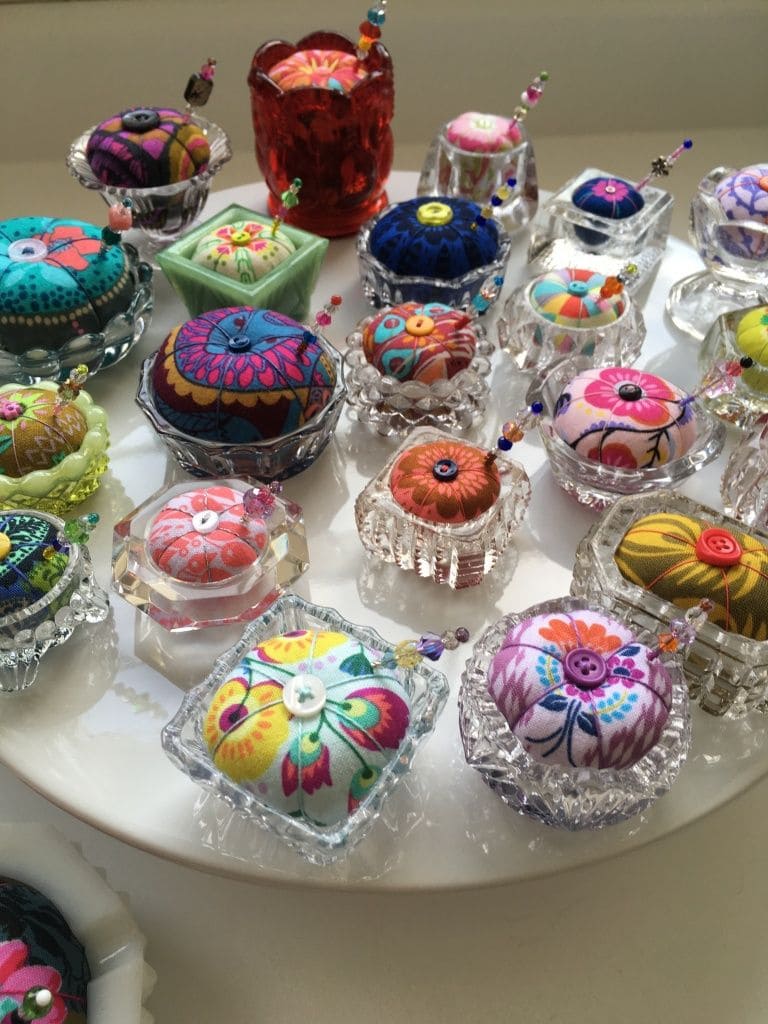
You can also turn forgotten glass dishes into bright little pin homes that feel more like décor than tools.
Colorful fabric tops paired with clear or tinted glass create a playful contrast that instantly lifts a sewing corner.
Each cushion sits securely inside its dish, keeping pins upright and easy to grab without cluttering the table.
Materials Needed
- 1 small glass dish or votive holder per cushion (opening 2.5-3.5 inches wide, depth at least 1 inch)
- Cotton fabric scrap, 1 piece per cushion (6 x 6 inches)
- Polyester fiberfill stuffing, about ½–¾ cup per cushion
- 1 button for center detail, 0.5-0.75 inch diameter
- Strong hand-sewing thread, 18-24 inches per cushion
- Hand sewing needle
- Fabric scissors
- Craft glue or museum putty (optional, about ½ teaspoon per dish)
- Straight pins with decorative heads, 20-35 pieces per cushion
- Optional beads for pin toppers, 1-2 per pin
Step-by-step Guide
Step 1: Place the fabric square right side down and sew a loose running stitch around the edge, about ¼ inch from the edge.
Step 2: Pull the thread gently to form a pouch, add stuffing gradually, and shape into a firm dome slightly wider than the dish opening.
Step 3: Tighten the thread fully, knot securely, and adjust the stuffing so the cushion holds its shape.
Step 4: Sew the button through the center from top to bottom, pulling snug to create a slight indentation.
Step 5: Set the cushion into the glass dish, securing with a small amount of removable adhesive if needed, then insert pins evenly across the surface.
#19. Mushroom Basket Pin Cushion Pair
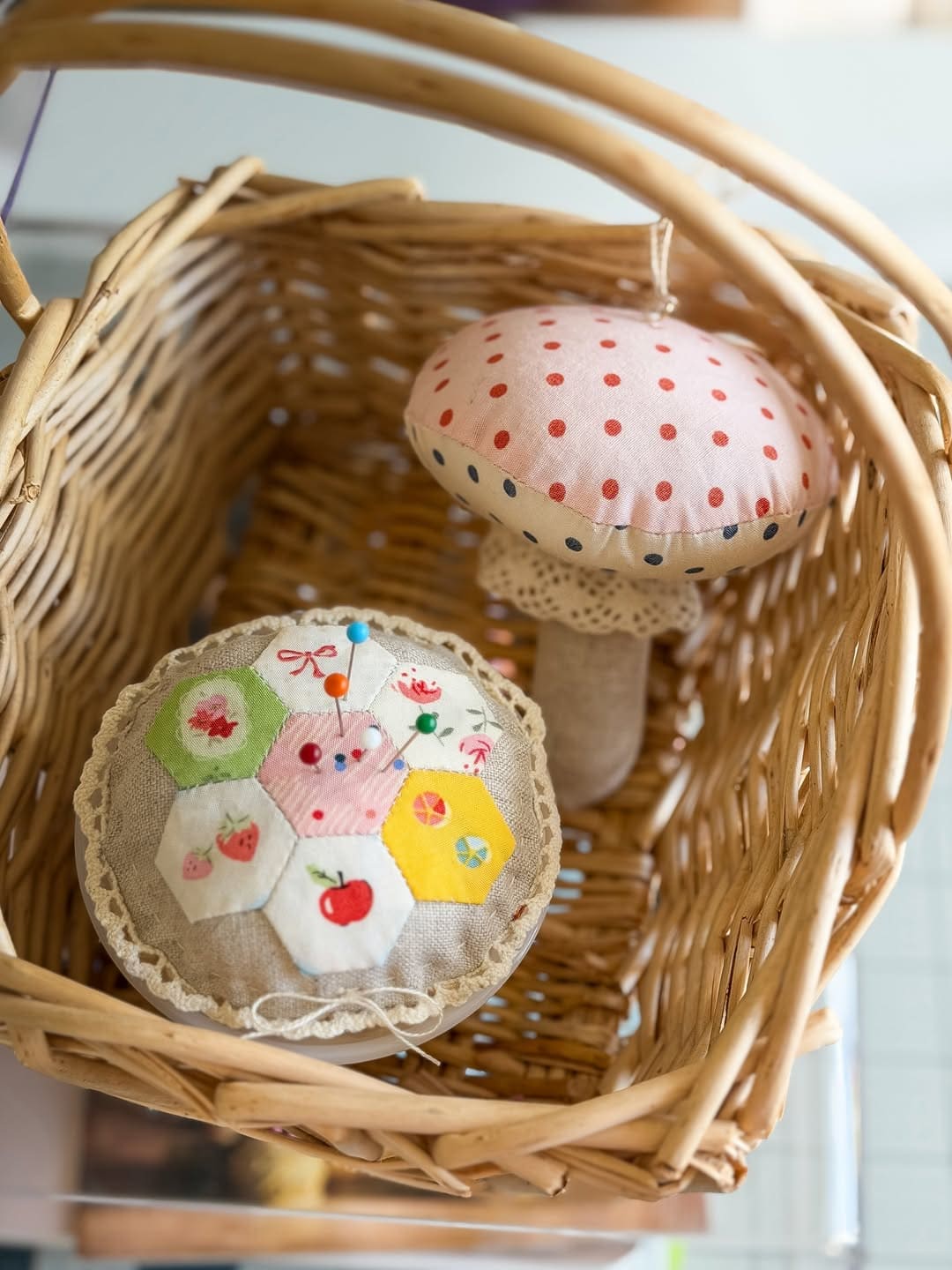
Ever wanted your sewing corner to feel a little softer and more whimsical?
These mushroom-inspired pin cushions tucked into a woven basket bring a cozy, storybook charm to your workspace.
One cushion hangs gently by a thread, while the other rests securely below, making them both decorative and easy to reach.
Materials Needed
- Cotton fabric scraps for mushroom tops: 2 fabric circles, each 4.5 inches diameter
- Cotton or linen fabric for mushroom stems: 2 rectangles, each 2.5 x 5 inches
- Lace trim, 12–14 inches total (optional)
- Polyester fiberfill stuffing, about 1 cup total
- Embroidery thread or strong sewing thread, 24–30 inches
- Hand sewing needle
- Fabric scissors
- Small wicker basket (approx. 6–8 inches wide, 4 inches deep)
- Thin string or embroidery floss for hanging, 6–8 inches
- Straight pins, 20–30 pieces
Step-by-step Guide
Step 1: Sew a running stitch around the edge of each fabric circle, pull slightly, and stuff with fiberfill to form rounded mushroom caps, then close tightly.
Step 2: Fold each stem rectangle lengthwise, sew into a tube, turn right side out, and stuff lightly to keep the shape soft but stable.
Step 3: Attach each mushroom cap to a stem using small, tight stitches, adding lace trim around the base of the cap if desired.
Step 4: Secure one mushroom to the basket bottom with hidden stitches or a few drops of craft glue, and attach hanging string to the second mushroom.
Step 5: Insert pins evenly into the mushroom tops and arrange them inside the basket for a tidy, decorative storage solution.
#20. Teapot Lid Pin Cushion Station
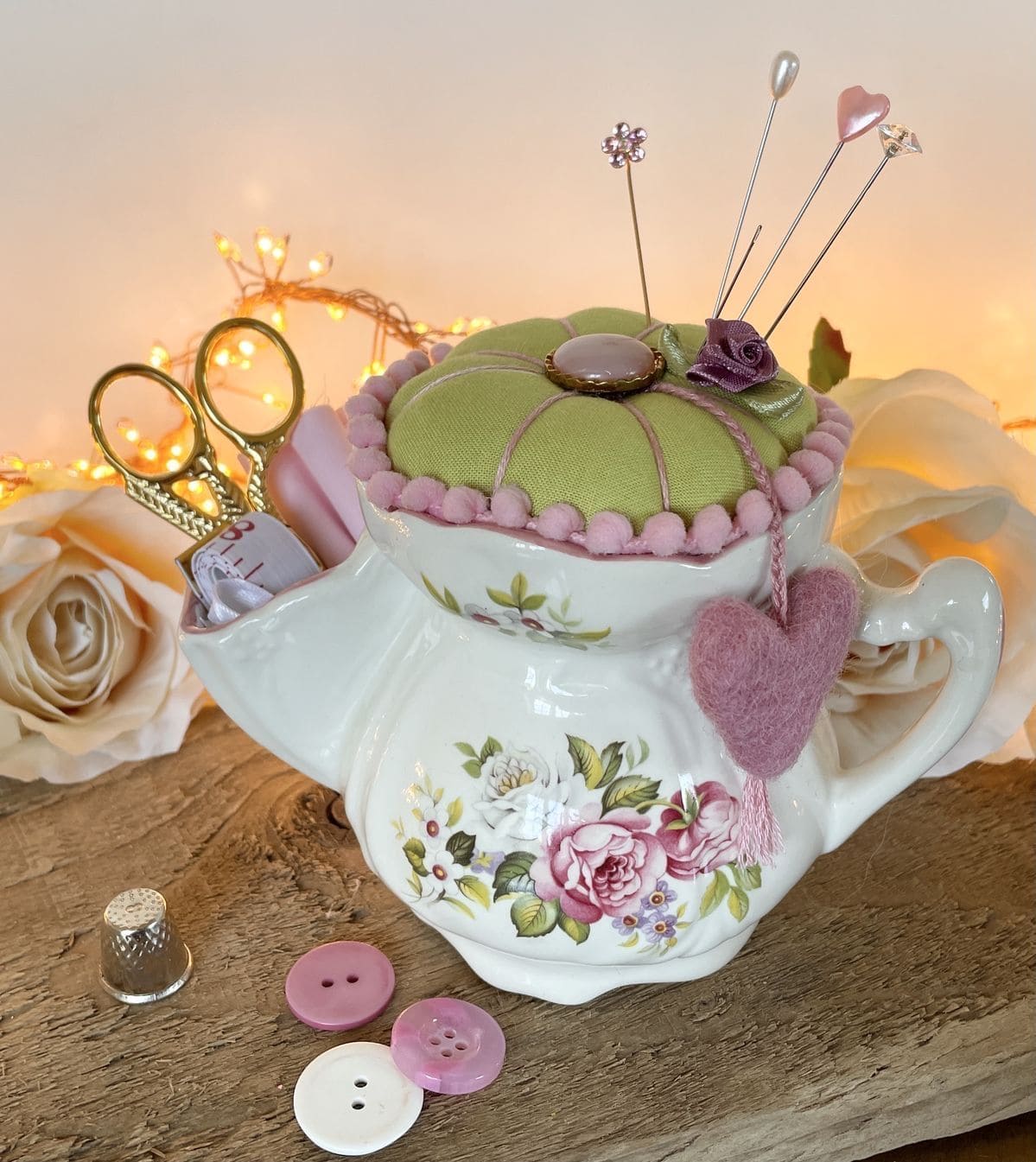
For anyone who enjoys sewing surrounded by soft details and vintage charm, this teapot pin cushion feels right at home.
A padded fabric dome replaces the lid, turning the teapot into a clever storage spot for pins and needles.
The side opening keeps scissors and small tools upright and easy to reach without cluttering the table. Decorative trims and gentle colors give it a cozy, almost heirloom feel.
Materials Needed
- 1 ceramic teapot with removable lid: lid opening approx. 3-3.5 inches diameter
- Cotton or linen fabric, 1 piece (6 x 6 inches)
- Pom-pom trim or soft lace trim, 10-12 inches
- Polyester fiberfill stuffing, about ¾ cup
- Strong sewing thread, 20-24 inches
- Hand sewing needle
- Fabric scissors
- Decorative button or cabochon, 0.75-1 inch diameter
- Thin cord or embroidery floss, 8-10 inches
- Craft glue or museum putty, about ½ teaspoon
- Straight pins with decorative heads, 25-35 pieces
- Optional felt charm or tassel for side decoration
Step-by-step Guide
Step 1: Sew a loose running stitch around the edge of the fabric square, keeping stitches about ¼ inch from the edge.
Step 2: Pull the thread gently to form a pouch, add stuffing gradually, and shape into a firm dome slightly wider than the teapot lid opening.
Step 3: Tighten the thread fully, knot securely, and adjust the stuffing so the cushion holds its rounded shape.
Step 4: Attach pom-pom trim around the base of the cushion using small hand stitches or a thin line of glue, then sew the decorative button at the center top.
Step 5: Secure the cushion onto the teapot lid with removable adhesive, place pins evenly across the top, and tuck scissors or tools into the teapot spout or opening.