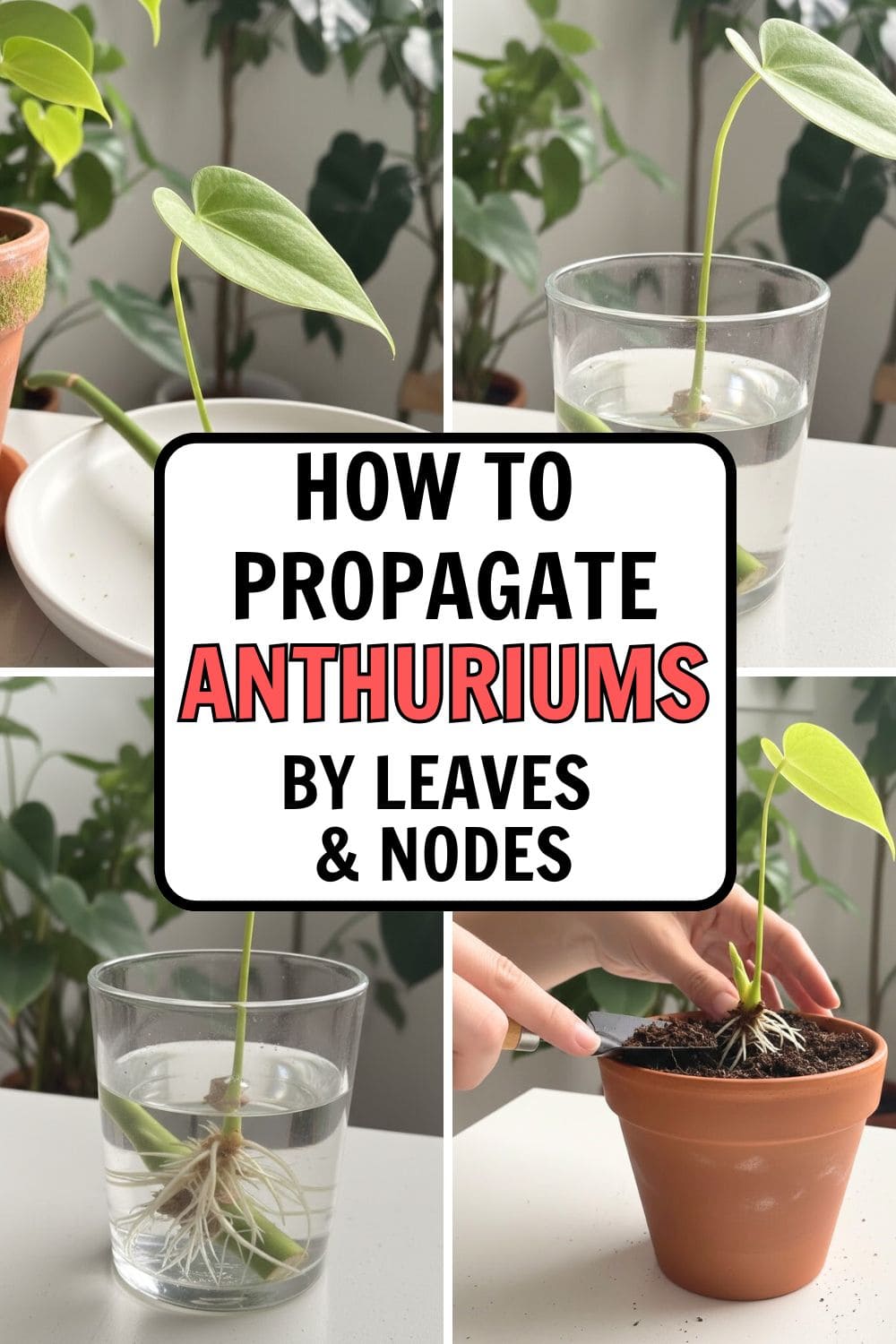
Propagating Anthuriums is often described as easy, yet many growers end up disappointed after weeks of waiting with nothing to show for it.
I went through the same cycle of hope, confusion, and trial before understanding what truly makes this plant propagate successfully. The key lies in one small but essential detail.
Anthuriums can only propagate when a node is present. Leaves play a supporting role, but they cannot create a new plant on their own.
How Anthuriums grow and why nodes matter
Anthuriums are aroids, which means they grow from nodes along their stems. A node is a growth center containing meristematic tissue.
This tissue is responsible for producing roots, new stems, and future leaves. Without it, propagation simply cannot occur.
Leaves lack this tissue. They can photosynthesize and remain green for a long time, especially in water, but they cannot initiate new growth.
That is why leaf-only cuttings almost always fail, even when they appear healthy for weeks or months.
What leaf-and-node propagation really involves
This method uses:
- One healthy leaf to support photosynthesis
- One viable node to generate roots and new growth
True leaf-only propagation is inconsistent and unreliable. Even when a leaf survives for an extended period, it almost never develops into a complete plant without that growth point.
Selecting the right cutting
The success of propagation starts before you ever make a cut.
I choose a mature, healthy Anthurium with visible stem sections. Young plants without exposed stems are harder to propagate reliably.
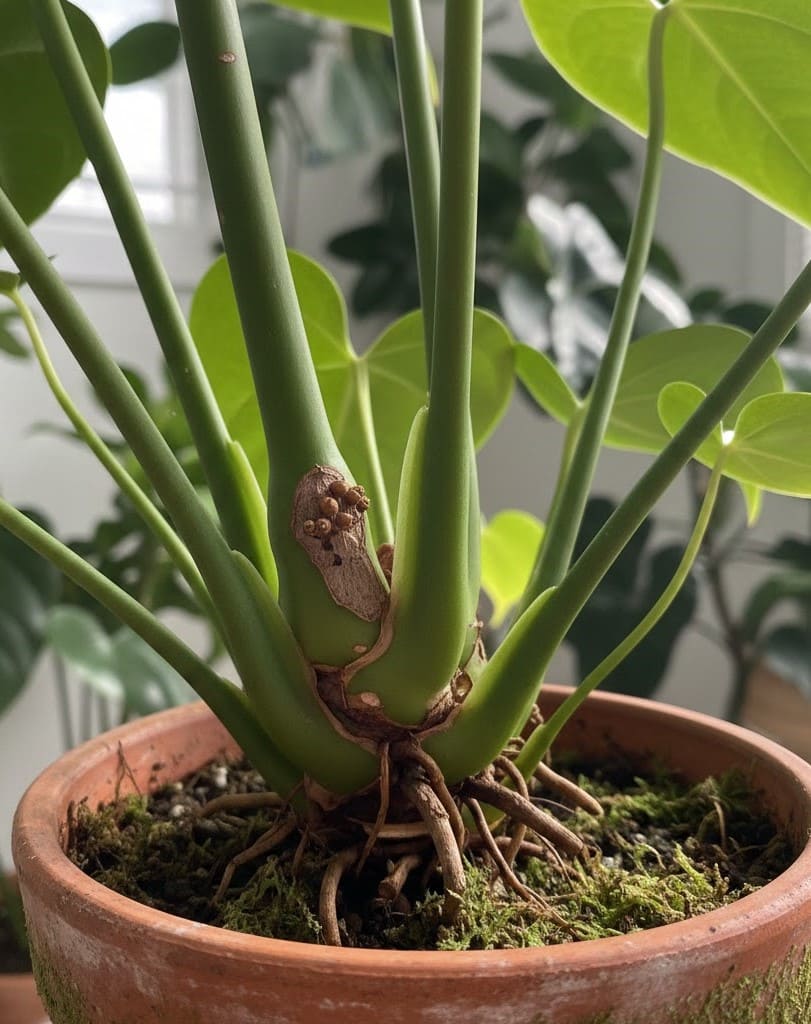
Along the stem, I look for a slightly thickened section where the leaf attaches.
Often there are small aerial roots, bumps, or rough texture. That is the node. I avoid sections that look thin, woody, or damaged.
If the node looks firm and healthy, the cutting is worth taking.
How to cut correctly
Using clean, sharp pruning shears or scissors, I cut just below the node. A slight angle helps prevent water from sitting directly on the cut surface.
The cutting usually ends up being 6 to 8 inches long, with one strong leaf attached.
After cutting, I let the piece rest in open air for about 20 to 40 minutes. This allows the cut to callous slightly, which significantly reduces the chance of rot once it goes into moisture.
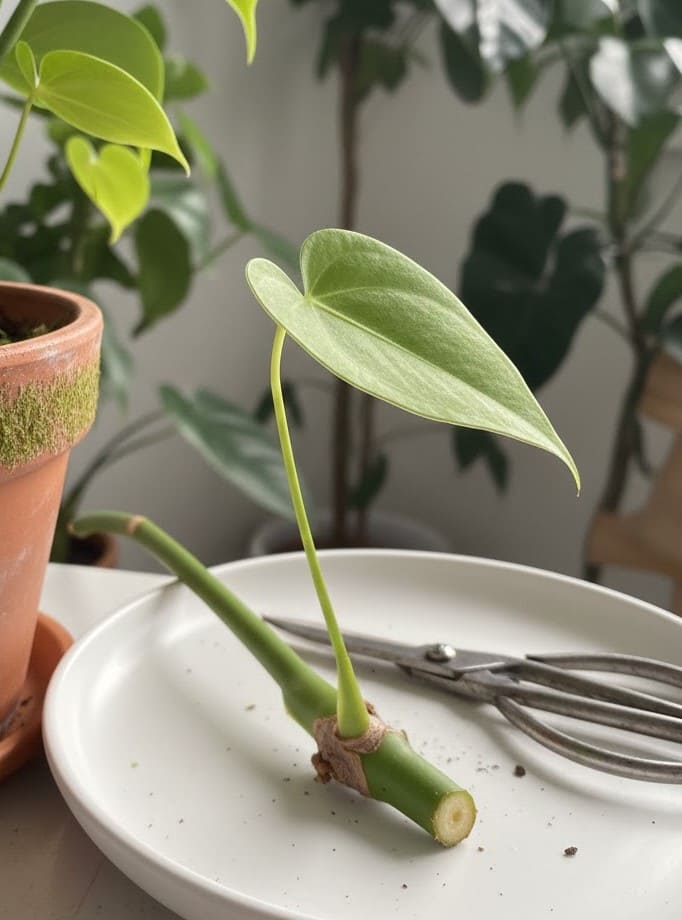
Some growers dip the cut end in rooting hormone or cinnamon powder.
Rooting hormone can speed up root initiation, while cinnamon offers mild antifungal protection. Neither is mandatory, but both can help.
Choosing the best rooting medium
Water
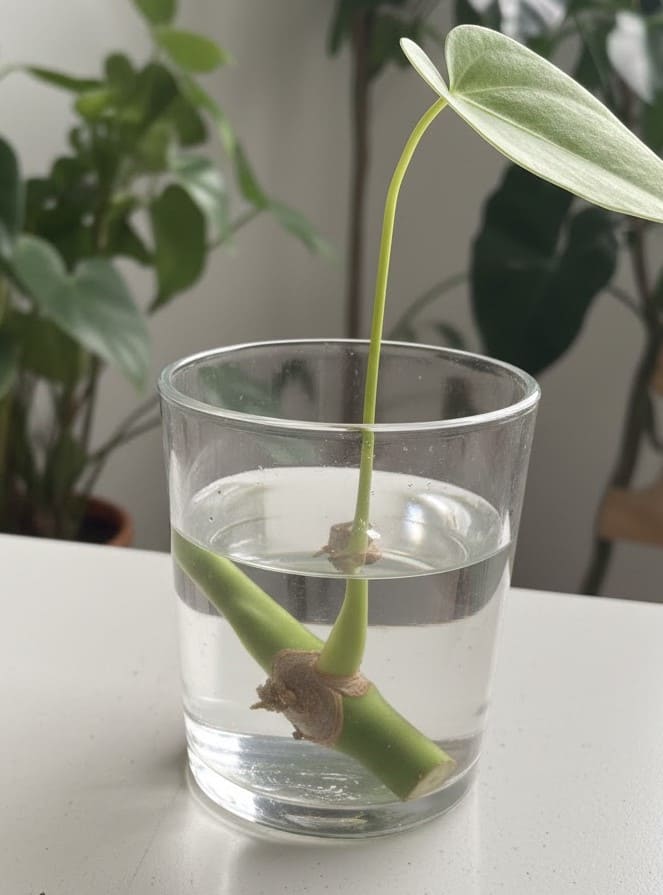
Water is ideal for beginners because it allows you to see root development clearly.
I place only the node in the water, keeping the leaf completely dry. The container should be clean and transparent.
Water is changed every two to three days to maintain oxygen levels and prevent bacteria buildup.
Sphagnum moss
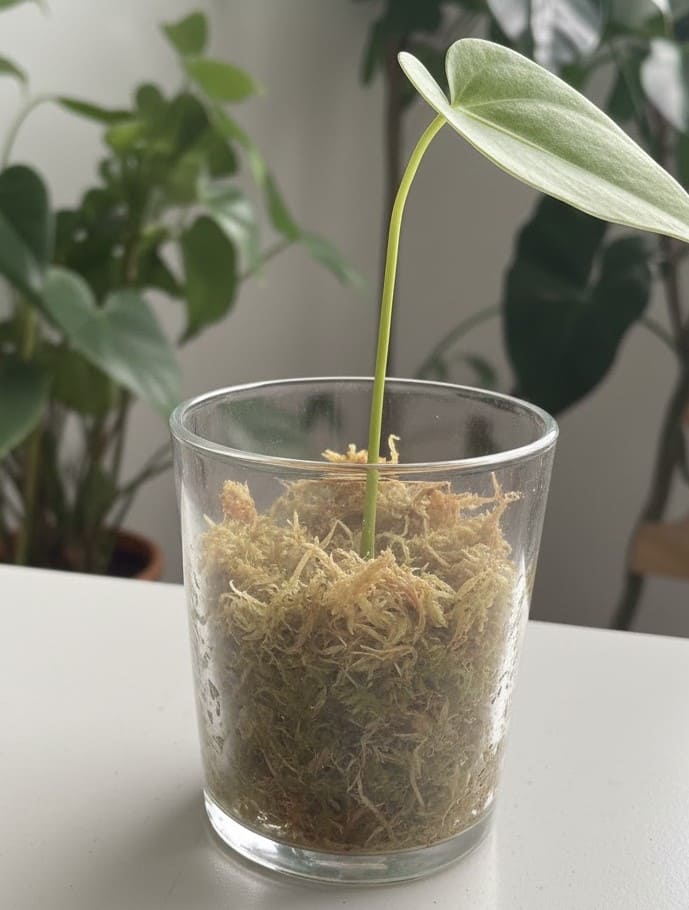
Moss provides excellent airflow while retaining moisture. I lightly moisten it until it feels springy, not wet.
The node is nestled into the moss while the leaf remains upright. This method works especially well in dry indoor environments.
Sand and peat mix
A loose mix of roughly equal parts coarse sand and peat can also work.
Drainage is critical as dense or compacted soil traps water around the node and often causes rot before roots can form.
Humidity, temperature, and light requirements
Humidity should stay moderately high, ideally around 60 to 80 percent.
I often place cuttings near other plants or loosely cover them with a clear plastic dome, ensuring airflow to prevent mold.
Temperature has a major impact on rooting speed. Anthuriums root best between 25 and 30°C, or 77 to 86°F. Cooler temperatures slow the process significantly.
Plus, light should be bright but indirect. Direct sun stresses the cutting and can scorch the leaf. Low light reduces energy production and delays rooting.
What happens during the rooting phase
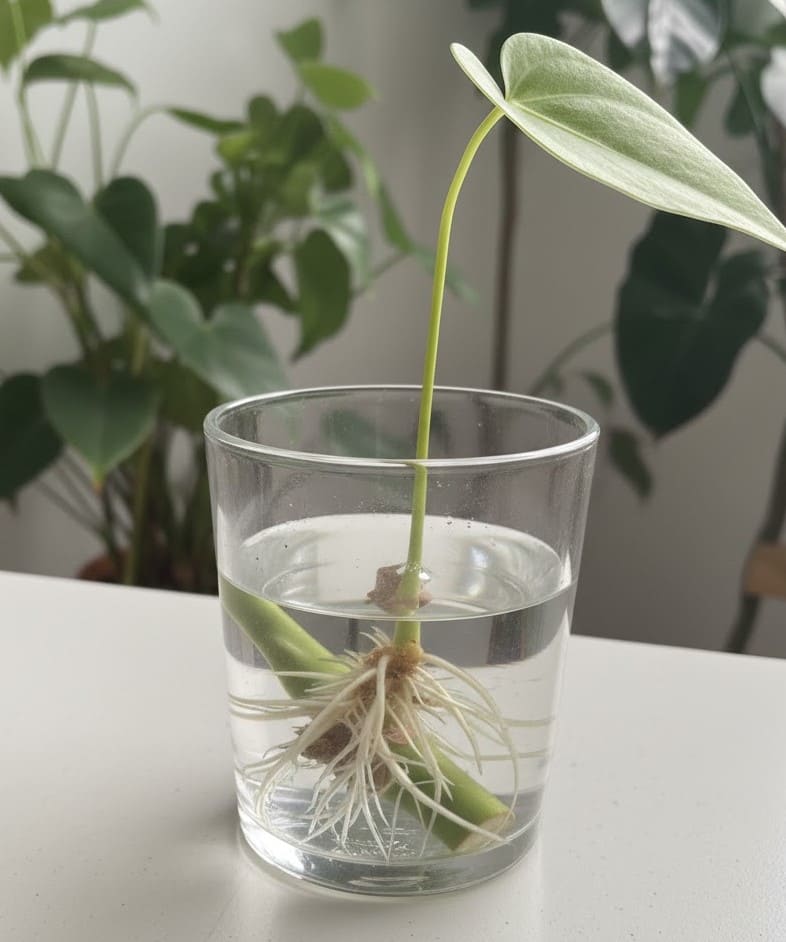
In the first two weeks, little appears to happen. Inside the node, however, root tissue is forming. Between weeks three and six, roots usually begin to emerge.
In water, they appear white or pale yellow. In moss or soil, gentle resistance when tugged slightly is a good sign.
New leaves come later, often several weeks after roots are established. This delay is normal. Anthuriums prioritize root development before visible growth.
When to transplant the cutting
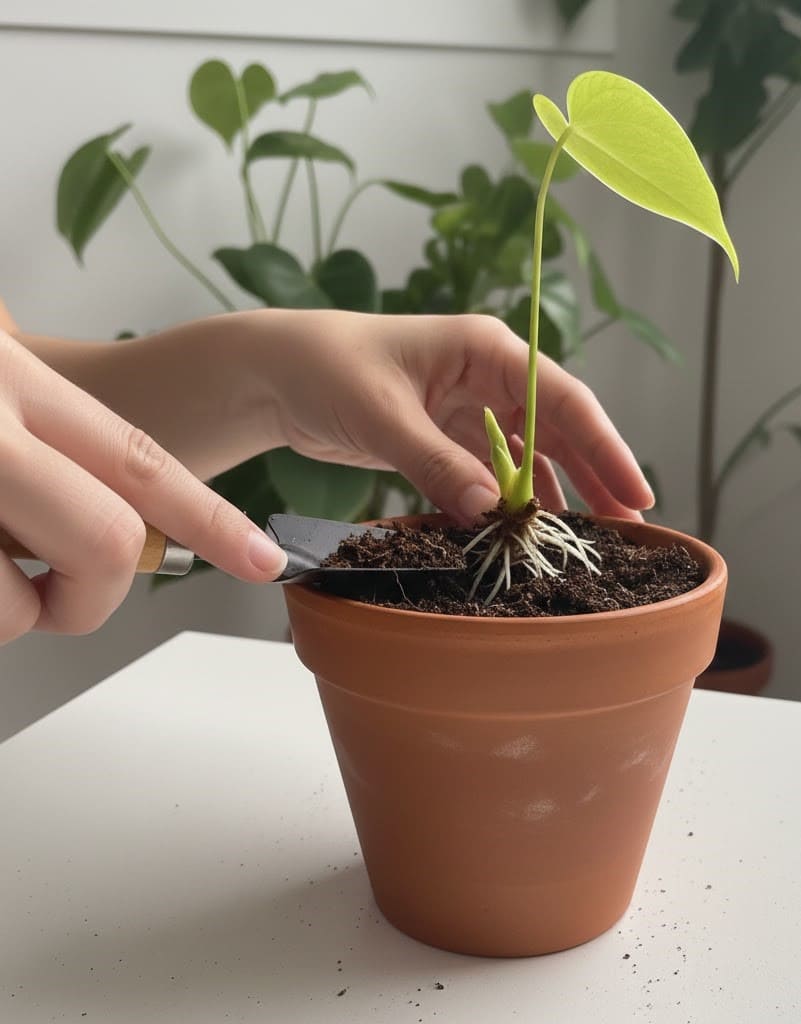
Once roots reach several centimeters in length and branch slightly, the cutting is ready for soil. I use a chunky aroid mix that allows air to reach the roots.
During the first few weeks, I keep the soil lightly moist and avoid fertilizer.
The first new leaf is often smaller or oddly shaped. This is normal. As the root system strengthens, subsequent leaves grow larger and healthier.
See also: Just Spray Some, Your Anthuriums Bloom Like Crazy with Full of Roots